| | | An Exciting Moment for the Nuclear Fusion Industry | | | |
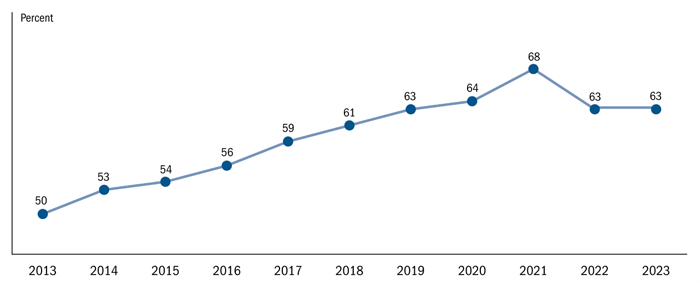
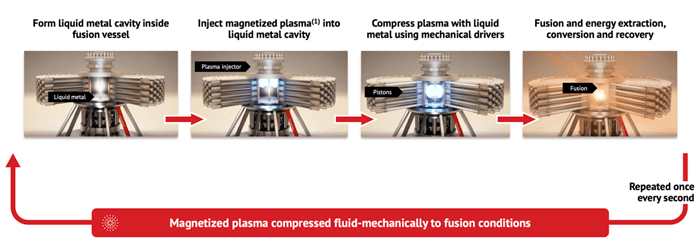
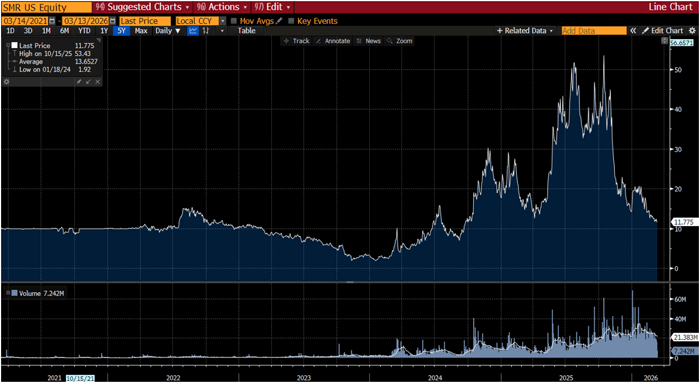
| Thousands of you tuned in to hear about NVIDIA's big announcement that I believe will have a significant impact on the markets… | | We've seen similar announcements from NVIDIA have a substantial impact on both popular tech stocks and smaller, pretender "AI" companies as well. | | It's important we don't make the mistake of assuming that because an AI company is popular, it is infallible. We've seen a number of popular tech stocks take a major hit this year. | | That is partially in response to the incredible pace of development in aspects of artificial intelligence… And it is partially rooted in panic. | | Just look at what's happened recently with the declines across the software-as-a-service (SaaS) industry. | | AI will absolutely reshape and disrupt every industry and job, resulting in major restructurings. Some companies will disappear entirely and go under. But much of the fear that we're seeing right now in some companies is overblown. | | | | | Here at Brownstone Research, we deeply understand that AI advancements will transform the global economy. Entire business models will be dismantled. Middlemen will disappear. Labor productivity will surge. Margins will compress in some areas and explode in others. | | That part is not up for debate. | | However, what we're seeing now isn't disciplined forward-looking analysis. It's panic. | | The "AI Fear Trade" has turned into a sell-first, ask-questions-later stampede. Investors are dumping anything that might be exposed to automation risk. | | We saw this first in software. The financial media recently labeled it the "SaaS-pocalypse." | | Personally, I've been calling for the death of SaaS since the summer of 2023. At that point, it was clear that the traditional per-seat SaaS model was vulnerable. If one AI system can do the work of five employees, why keep paying for five licenses? | | That's rational. And the market has responded accordingly. | | | | While I maintain that the "AI Fear Trade" is largely overblown, that doesn't mean there won't be market shocks along the way. | And I suspect one such moment is coming next week when Nvidia takes center stage on March 16… a culling that's going to hit the sort of companies I've been warning my readers to steer clear of for years… | | The ones who were too slow to adopt and adapt, the speculative hype plays, and the pretenders masquerading as artificial intelligence companies that believe riding the coattails of successful AI companies is as simple as tacking an "AI" onto their name. | | But it's also going to affect the seemingly "untouchable" tech darlings where we're already starting to see cracks form in the foundations… it just hasn't become obvious yet. | | Fortunately, my team and I have a plan in place for when the culling begins… we've identified a handful of smaller companies particularly well-positioned to survive and thrive through both this disruption and any other curveballs this AI boom might throw our way. | | History's pattern is clear. Every technological revolution creates a group of dominant infrastructure winners, platform operators, and ecosystems that benefit tremendously. | | Think the groundbreakers in industries like agentic AI automation and AI-powered biotech that, a few years down the line, folks will wish they'd known about sooner. | | Beyond that, we've also spotlighted a stack of toxic AI tech stocks that should be avoided at all costs… which includes a couple of names I believe will come as a surprise to many. | | I'm explaining all of this because if you missed yesterday's briefing, there's still time to prepare. | | NVIDIA's big announcement is coming next Monday, March 16… and our replay is still available to view for a short while longer. | | If you want to learn more, you can go here to catch it. | | Have a great weekend. | | Jeff | | Paving the Way for a Better Future | | | Thanks for the thoughtful article. It will be interesting to hear your thoughts on this follow-up series of questions related to some real-world actualities. | | Many people in the U.S. cannot address a $400 emergency that arises because they have no savings. These same people often (removing those who are relatively high earners but even higher spenders) have limited resilience. The likelihood that these people will carve out resources for investment and have the wherewithal to select the right places for investment is small. | | These are also people who are likely to have their jobs lost and a limited ability to find a career that will offer any semblance of a comfortable life. What percentage do you think this represents in the U.S., and how would you address this challenge? | | There are also concerns about Generative AI and its ability to level the playing field for those who create in the arts (i.e., painters, writers, etc.). Do you envision this accelerating the plight of the starving artist? | | To get a little into politics, not quite right vs left, but more extreme right vs extreme left. Trump was initially elected in 2016 because he connected with the forgotten members of the (lower) middle class with the promise of opportunity. | | My belief is that the majority (but not super-majority) of Americans are fiscally conservative and socially conscious. This explains a good bit of the generosity of many Americans. | | A big challenge is the notion that the worst place to invest a dollar is the U.S. government because of the inefficiencies and wasteful spending. Any dollar sent will be administered down to fifty cents and then applied to an ineffective program. | | As AGI accelerates, more people will feel like forgotten members of the United States. These people may believe the only solution lies in Socialism (Mamdani election in NYC), with the fundamental flaws of production, funding, and human greed. | | My sense as a Libertarian is that I only really wanted three things out of the Federal Government: national defense, a common currency, and interstate roads. As things progress and large swaths of the current population feel worthless or hopeless (this is the PHQ-2 screen for depression) would you envision that the Federal Government has to play a role in providing 'wealth' to those incapable of generating it themselves? | | Would you potentially envision centralizing investments by the Federal or State Governments into the technologies you report on to support the citizens who have limited potential to support themselves? | | How would you segregate this from socialism, as one of the biggest risks is advocating the "progressive agenda," which mathematically is regression to the mean? | | This squashes creativity and the drive for success, as those who are successful have their successes taken from them so they "have exactly the same as everyone else." | | Any thoughts? | | – Jeff L. | | | | Hi Jeff, | | You've raised some very heavy topics here. So heavy that it's difficult to do these topics justice in our weekly AMA. | | They speak to ideology, political philosophy, the willingness (or not) for individuals to be self-accountable and self-responsible, and this idea held by some that they are entitled to a certain lifestyle, and a portion of what others have earned through hard work. | | Paying taxes to the U.S. government now is a particularly painful exercise. If we've learned anything over the last several years, it's that the scale of government fraud in the U.S. is simply mind-blowing. | | If we remember back to last year when Elon Musk launched the Department of Government Efficiency (DOGE), many people thought that he was crazy with his estimations about the scale of the fraud that had been taking place. The team at DOGE has made incredible progress, with an estimated savings of $215 billion to date through their efforts. | | But this is just the tip of the iceberg. Politicians in D.C. were routing taxpayer dollars into non-governmental organizations, which were then using those funds to facilitate things like illegal immigration and violent protests around the country. | | And as we've seen in Minnesota, we have systematic fraud with fake day care centers and health care clinics. | | In California, we have seen massive fraud in Medicare, EBT, and even hospice fraud. New York, Pennsylvania, Massachusetts, Ohio, Illinois, and on and on. It is at the national level and at the state level. It's systematic and almost always designed to buy a certain kind of vote, and also enrich those who intentionally implemented these systems to facilitate the fraud. | | For those who have spent the time to understand the scale of the theft, I doubt anyone would feel good about paying into a system like this. It makes me sick to my stomach. | | The fraud needs to be cleaned up, those who enabled and committed the fraud should be prosecuted, and the information must be made public so that everyone knows there are consequences. Now is the time to clean it up. | | It's easy to feel like there is no way to make a change. It's all so overwhelming. And it all seems so negative. But there is reason for us to be optimistic. | | This is the first time that the cover has been lifted, and there is momentum to clean up the fraud on a multitrillion-dollar scale. Just imagine, if the fraud can be cleaned up, there is the potential to eliminate the fiscal deficit. | | I'm in complete agreement that a smaller government is a good thing. Economic well-being through clear and business-friendly regulations, rule of law, protection of property, and freedom of speech lifts an entire country. Socialism, and communism for that matter, are failed experiments that always end badly. It may take a long time, but in the end, it always collapses on itself due to massive debts. | | To your point, one area where there should be government support is for those who are unable to care for themselves (special needs, severely injured, veterans, etc.). Those who are capable but unwilling to work should not be the government's (or the taxpayers') responsibility. | | Ironically, policies that facilitate economic growth have the largest positive impact at the population level. It creates opportunity, increases GDP/capita, and improves overall quality of life for a country's citizens. This approach is far better than facilitating handouts and dependency. | | Today, about a third of the population doesn't have the savings to cover a $400 emergency expense with cash. The chart below was from a 2024 Federal Reserve report analyzing the economic well-being of U.S. households in 2023. | | The numbers have improved a bit since then, as inflation is under control now and gas prices have dropped significantly (except for the short-term spike caused by the conflict with Iran), as have the prices of many daily necessities. | | U.S. Households That Could Cover a $400 Emergency Expense Using Cash (%) | | | | Source: Federal Reserve | | With a U.S. national debt of $38.8 trillion and growing, there is seemingly no way out of this mess. I hear from many people things like "why bother?" Or "there's no way out," or "there's nothing we can do about it," or the classic progressive stance that "debt doesn't matter." | | Of course, those are all nonsensical positions. There must be a concerted effort to eliminate fiscal deficits, eliminate fraud, become more efficient (using technology), and effectively buy time for what's coming. | | Artificial intelligence and robotics are going to save the day. They will not only help address the debt/GDP issue, but they'll also lift up the entire population with an improved quality of life. There will soon be no barriers to a high-quality education and great healthcare thanks to technology. And the price of goods and services will eventually distill down to the cost of electricity needed for the production/delivery of those goods and services. | | Through my own analysis, intelligent humanoid robots will be capable of replicating themselves by late 2028/early 2029. All these robots will need are raw materials and electricity to get the work done. And by 2030, we will have artificial superintelligence (ASI). | | All of these changes are happening in less than five years. Economic growth will exceed 10%, and job opportunities will be everywhere for those willing to take them. It may require moving to where the jobs are and/or retraining for what's needed, but there will be work. | | And in 10 years or so, there will be tens of millions of humanoid robots in the U.S. alone performing economically valuable activities. Goods and services will be far cheaper, and the demographic that today doesn't have $400 in savings will be in far better shape as the cost of living declines. | | Elon Musk even goes so far as to say, "Don't worry about squirreling money away for retirement in 10 or 20 years, it won't matter." I don't like that comment. It's reckless and not entirely true. | | He's right in that we won't have to work nearly as hard, and everyone will have access to a higher quality of goods and services. But if we want to live a better life, we'll still need capital to pay for land, electricity, and leisure activities. | | The bigger, existential issue that you raise is, in a world like this – where we no longer have to work 40, 50, 60, 80-hour weeks – how will people find meaning in life? | | How will people become motivated to build, create, be productive, and do something meaningful with their lives in a world with abundance? | | That's a hard one to answer. Unfortunately, most won't. At a population level, most take the path of least resistance. They take the comfortable route, not the hard one that could deliver greater benefits long term. But the quality of their lives will still be better because of the abundance that has been created through the development of technology. | | As for their character, that will be left to each individual to answer. | | | | General Fusion SPAC | | | Hi, I am an all-in member with Jeff and Brownstone Research. | | For the mailbag or a SPAC service he runs, I would love to hear Jeff's take on General Fusion going public via SPAC. | | – Mike L. | | | | Hi Mike, | | It's great that you saw the news on General Fusion. | | I've been an investor in General Fusion since early 2020, so it's a company I'm very familiar with and bullish on. That's the reason that I will not be able to make any recommendations on General Fusion, as we have a no-conflict-of-interest policy at Brownstone Research. | | I have been predicting that we would see at least two nuclear fusion companies go public in 2026, and General Fusion will be the first via its merger with a SPAC. This is an exciting moment in the fusion industry, and many other fusion companies will follow in the next 24 – 36 months… | | General Fusion is a great candidate to lead the way, as I see it as one of the best fusion companies that has a clear path towards commercialization. General Fusion uses a magnetized target fusion (MTF) approach to nuclear fusion. | | This approach uses mechanical compression through the use of pistons to create the conditions in the plasma for nuclear fusion. This is done using short pulses, over and over again to produce limitless clean energy. | | | | Magnetized Target Fusion | Source: General Fusion | | The benefit of this approach is that you do not need lasers, nor do you need superconducting magnets to create and control a fusion plasma. | | This will likely result in clean energy production at a cost per megawatt hour that is less than nuclear fission, coal, natural gas, solar, and wind. The best of both worlds. | | There are so many approaches to nuclear fusion right now. This excites me because every possible technical iteration is being iterated upon. They'll all be able to create a fusion reaction, but the real question is which approaches will become the most economically viable? | | General Fusion is one of the most promising companies in the industry, and the IPO will give the company additional capital to lean into its mission towards commercialization. It will still take a few more years, but the path is clear. | | I expect that General Fusion's IPO will be great for the industry. It will raise awareness and excitement in the sector. | | But one word of caution, nuclear fusion and nuclear fission companies working on SMRs are essentially pre-product revenue companies. It will be years before they will be generating revenue from their technology (fusion reactors). | | NuScale (SMR) is a great example as a next-gen nuclear fission company. It also went public via a SPAC in 2022. It was early for NuScale, and the stock suffered for the first couple of years, but the company moved sharply higher under the pro-nuclear regulations of the Trump administration, sending the stock well above $50. | | 5-Year Chart of NuScale (SMR) | | | | But in the last several months, SMR has fallen back down almost to its IPO price of $10 a share. It has been a rough ride, and it is still richly valued. | | Stocks like these that are early in their journey tend to be best traded when there are large institutional inflows. Volatility is expected. And SMR will almost certainly have to hold a secondary offering in the next couple of years to raise additional capital. | | This is not a long-term "set it and forget it" kind of stock. It needs to be tracked, followed, and traded until it reaches the stage where it is generating free cash flow. | | Regardless, nuclear energy will continue to be a keen focus at Brownstone Research for years to come. This is going to be a massive year for both small modular reactors and fusion reactor technology. | | Combined, these two technologies will lead to a future of cheap, limitless, clean energy and a future of abundance. | That's all for this week's AMA. If you have a message or question for me or any of my team, you can always reach us right here. | | My team and I enjoy hearing from you, and we read everything you send in. Just keep in mind I can't give personalized investment advice, and I can't always broadcast questions concerning exclusive research. | | Have a great weekend, everyone. | | | | | | | | | Mar 12, 2026 • 5 min read | | | | | | Mar 11, 2026 • 5 min read | | | | | | Mar 10, 2026 • 6 min read | | | | | | | | | | | To ensure our emails continue reaching your inbox, please add our email address to your address book. This editorial email containing advertisements was sent to penunggangbadai.moneyblog@blogger.com because you subscribed to this service. To stop receiving these emails, click here. Brownstone Research welcomes your feedback and questions. But please note: The law prohibits us from giving personalized advice. To contact Customer Service, call toll free Domestic/International: 1-888-512-0726, Mon-Fri, 9am-7pm ET, or email us here. © 2026 Brownstone Research. All rights reserved. Any reproduction, copying, or redistribution of our content, in whole or in part, is prohibited without written permission from Brownstone Research. | | | | |










0 Response to "An Exciting Moment for the Nuclear Fusion Industry"
Post a Comment