
You are a free subscriber to Me and the Money Printer. To upgrade to paid and receive the daily Capital Wave Report - which features our Red-Green market signals, subscribe here.
My Concerns About The March 2026 Jobs Report (Morning BRRR)The headline number masks some serious issues.
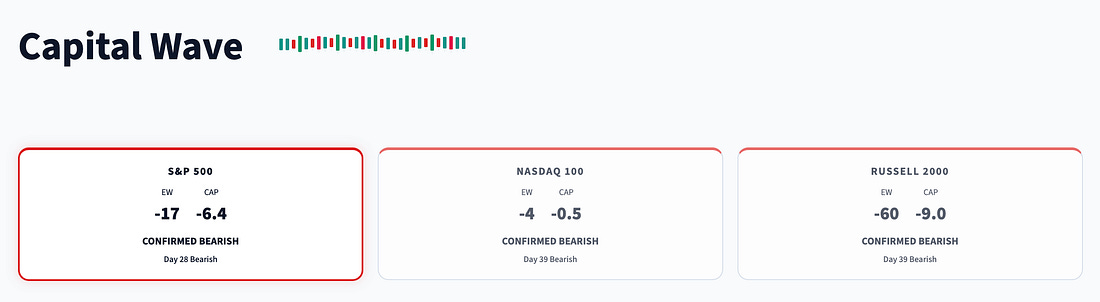
Dear Fellow Traveler, Markets are closed today… So let’s discuss the one thing most people will glance at for 30 seconds and then forget. The March jobs report. On the surface, the report gave everyone what they wanted. Good feelings… The economy added 178,000 jobs in March, and the unemployment rate held steady at 4.3%. That’s the kind of jobs figure that keeps the narrative intact. The media will say over the weekend that there aren’t any cracks or panic or urgency… But you have to know where to look to understand what is really happening… The story gets harder to explain and even harder to ignore… Yes, payrolls increased… but there are serious warning signs… This is a report where the headline and the reality are moving in opposite directions. Payrolls Up, Employment DownThis is the sort of report where markets would gap up on the opening reaction, only to give back gains later in the day when people actually take the time to read it. Payrolls did increase… You know what went down? The number of people who are actually employed. The U.S. labor force dropped by almost 400,000 people. And about 488,000 people moved into the “not in the labor force” category in ONE MONTH. This is an alarming number. People aren’t losing jobs in large numbers… They’re not losing jobs… they’re leaving the labor market entirely. And because we operate in a world of alchemistic counting, they just don’t count anymore as unemployed because they’re no longer looking for work. Right now, just 61.9% of the population is participating in the labor force. What’s the real unemployment rate? No, seriously, I don’t feel like making some bold claim because it will just attract the people who say, “Well, ACkquaully - the BLS numbers do reflect… blah…” All I’ll tell you - because the math supports it from this report - is that the unemployment rate is expected to remain at just 4.3% because fewer people are participating in the market under the current measurements. So, now, if you want to understand the shift, you have to look at the edges. How This WorksThis next number is wild. The number of people classified as “marginally attached” to the labor force increased by 325,000 in a single month… to 1.9 million Americans. These are people who want a job, are available to work, and have sought employment in the last 12 months. However… they just stopped looking for jobs in the last month. The number of discouraged workers - people who will say that there isn’t a job for them out there… popped by 144,000 to 510,000. New entrants to unemployment fell by 91,000. That decline isn’t because people have found jobs. It’s likely reflecting fewer people attempting to enter the workforce. The pipelines are drying up right now. We do not have a strong jobs market, and we’re experiencing a huge surge in cost-of-living pressures that dates back to the pandemic-era of monetary expansion and continued stimulus. It’s been all gas and no brakes, and a whatever-it-takes attitude… But it’s clearly not getting people back into the labor force… and it’s not creating conditions conducive to real growth and higher employment. It’s like this economy is… “financialized,” and activity matters more than outcomes. And Then There’s the Revision.February’s job number had originally shown a loss of 92,000 jobs. They revised this to 133,000. If you were building a roof, and you were this off in your original estimates… they’d take away your contracting license. In a world of advanced technology and data sets that can likely track job figures much better than phone calls and random surveys, one has to wonder why we don’t just improve the reporting mechanisms. But you know the answer to that… We had 41,000 additional jobs that quietly disappeared after the headline had already moved on. That’s a feature… not a bug. So, what did we get for 178,000 new jobs? More Hocus PocusHealthcare accounted for 76,000 of those jobs… about half the total. I will remind you that healthcare is basically government-adjacent in this economy. But then you have to dig into the healthcare number. About 35,000 of those job gains were physicians returning from a strike. These weren’t new jobs… but people just returning to work. So, strip out the strike, and this implies underlying job growth closer to 143,000. Construction added 26,000. Transportation and warehousing added 21,000. Social assistance added 14,000. The losers? Financial activities lost 15,000 jobs, and federal government employment fell by another 18,000… bringing the total decline to 355,000 federal jobs since October 2024. We’ve seen an almost 12% reduction in the federal workforce in 18 months, a change that affects a Keynesian approach to spending. Overall, we’re not seeing a broad-based expansion, just selective growth in a few concentrated areas. The February diffusion index, which measures how many industries are adding jobs compared to reducing them, dropped to 49.2. Any figure under 50 tells us that more industries are cutting jobs than adding them. More industries cut jobs than added them last month. Again, people don’t read these things. And that’s funny to me, because - like the Bank for International Settlement reports that I’ll read - it’s like they know they can just tell you the truth in a footnote and say they disclosed everything because they know that people aren’t going to really dig in too deep. There were a few other things that popped out. The average workweek declined to 34.2 hours, which suggests that employers may be starting to tighten schedules. Hours tend to get reduced before we see it in the headline data. Meanwhile, the number of people working part-time because of business conditions increased by almost 270,000 in a month… so employers are pulling back - likely - without issuing layoff notices. The number of people who have been out of work for 27 weeks or longer - the definition of long-term unemployment - has now increased to 322,000 over the last 12 months. And now, one in four unemployed Americans hasn’t worked for more than six months. The U.S economy is creating jobs in places you’d expect, but it’s not doing a good job getting people into the workforce. We have a decline in participation and an increase in long-term unemployment. Taken together, the report shows an economy that is still generating jobs in the places you’d expect, but is less and less effective at pulling people into the workforce. Participation is slipping. Long-term unemployment is elevated. A growing number of people are disengaging from the search process altogether. And the headline number itself is inflated by a one-time strike resolution unrelated to organic demand. The system is still functioning, but the balance is changing. But we have to discuss something important on the horizon… In roughly two months, almost two million college graduates will walk into this labor market looking for work. If they find real jobs… WHAT FUN! But if they can’t… and the data above suggests that finding work is getting harder, not easier… most of them will never show up in the number everyone watches. If a new graduate takes a part-time barista job because it’s all they can find, the BLS counts them as employed. There is no distinction between a 22-year-old with an engineering degree pulling espresso shots for 15 hours a week and a 22-year-old with an engineering degree working at an engineering firm. Both count the same in the headline. The only place you’d see the difference is in “part-time for economic reasons,” which already surged by 269,000 this month. If they get discouraged and stop looking… even for one month… they fall out of the labor force entirely. They are not unemployed. They are not employed. They’d disappear from the unemployment data entirely. They’d join the 488,000 people who disappeared from the workforce this month alone. The unemployment rate will hold steady regardless. It’s built to absorb weakness without the headline ever moving… not because the economy is strong, but because fewer people are left inside the system to measure it. Take An Extra Five Minutes A DayOur momentum signal remained negative yesterday, again a reminder that what’s brewing under the surface is way more important than what we see in headlines. Institutional flows aren’t strong, insider buying hasn’t picked up, and there isn’t any real policy accommodation, just Tweets and headline writers pushing us in every different direction. The important thing is that we be cautious about so much of the math that is flying around this nation right now… on jobs, on private credit… and what’s happening in the oil markets. It’s more important than ever to dig BENEATH the headline and center your focus on what really matters. Don’t just read the first paragraph of an article. Go to the end… understand the data, look for the conflicting argument. Don’t just settle for what a publication wrote under a hard deadline or because a writer wanted to be the first to break a story… Absorb every detail of these reports. They will matter immensely in six months. I dig into all of it each morning with Money Printer Pro and give readers direct access to our breakout and breakdown stocks, and Capital Wave momentum reading that turned negative on January 28 before the gold/silver crash, the largest momentum downturn in years, and the ensuing impact of the war…
In the video above, I walk through what’s happening in more detail, including the growing disconnects in the oil markets and the ongoing concerns building inside private credit. So, give it a watch… Don’t cost nothin’… Stay positive, Garrett Baldwin About Me and the Money Printer Me and the Money Printer is a daily publication covering the financial markets through three critical equations. We track liquidity (money in the financial system), momentum (where money is moving in the system), and insider buying (where Smart Money at companies is moving their money). Combining these elements with a deep understanding of central banking and how the global system works has allowed us to navigate financial cycles and boost our probability of success as investors and traders. This insight is based on roughly 17 years of intensive academic work at four universities, extensive collaboration with market experts, and the joy of trial and error in research. You can take a free look at our worldview and thesis right here. Disclaimer Nothing in this email should be considered personalized financial advice. While we may answer your general customer questions, we are not licensed under securities laws to guide your investment situation. Do not consider any communication between you and Florida Republic employees as financial advice. The communication in this letter is for information and educational purposes unless otherwise strictly worded as a recommendation. Model portfolios are tracked to showcase a variety of academic, fundamental, and technical tools, and insight is provided to help readers gain knowledge and experience. Readers should not trade if they cannot handle a loss and should not trade more than they can afford to lose. There are large amounts of risk in the equity markets. Consider consulting with a professional before making decisions with your money.
|








Subscribe to:
Post Comments (Atom)
0 Response to "My Concerns About The March 2026 Jobs Report (Morning BRRR)"
Post a Comment