|
The Hidden Cost of Time Decay
|
|
Let’s say a stock is trading at $100, and you believe it’s about to rally. So you buy a call option to gain exposure to the anticipated up move.
|
|
A few weeks later, the stock has climbed to around $105. You clearly got the direction right. Yet your option might now be worth less than you paid for it. At first glance, it doesn’t make any sense.
|
But the option isn’t just riding on direction. It’s also battling against the passage of time. Every day an option gets closer to expiration, it loses a bit more of its value. If the move doesn’t come soon enough or isn’t large enough, that time decay (or theta in option jargon) can outweigh the benefit of the stock moving in the right direction.
|
Then there’s volatility. Perhaps the market expected a much larger move than the one that actually unfolded. As that uncertainty unwinds, option premiums fall. Recall that higher volatility leads to higher option premiums… and vice versa.
|
|
Again, you correctly predicted the direction. But the option still underperformed because the move wasn’t as significant as expected by the market.
|
|
That’s why direction is never enough on its own. It’s simply one piece of the puzzle.
|
Tune in to Trading With Larry Live 
Each week, Market Wizard Larry Benedict goes live to share his thoughts on what’s impacting the markets. Whether you’re a novice or expert trader, you won’t want to miss Larry’s insights and analysis. Even better, it’s free to watch. Visit us on YouTube to catch the latest! |
|
|
How Professional Options Traders Think Differently
|
|
Professional traders approach the market differently from other folks. Instead of asking whether they’re bullish or bearish on a stock, they’re constantly weighing probabilities, risk, and reward. They’re trying to identify and profit from mispricings in the market.
|
|
That’s an important distinction. It’s how I’ve always approached options trading.
|
|
I’m not trying to predict every move and countermove in the market. I’m looking for situations where fear, exuberance, or uncertainty has pushed option prices well beyond fair value.
|
|
My job as a trader is to identify those situations before the market recognizes the mispricing – and then position myself to profit when prices eventually revert to fair value.
|
|
While direction is certainly part of the equation, it’s part of a much bigger puzzle. Timing and volatility are equally important. When we’re buying options, we’re not just looking for the stock to move. We also want (rising) volatility working with us.
|
|
Risk management and position sizing also matter. We don’t want to get overexposed to any trade. Another crucial element is patience.
|
|
That’s why I spend so much time waiting for the right setup rather than feeling like I have to be active – a mistake many new traders make.
|
|
When all of those pieces come together, options become an incredibly powerful tool. They allow us to clearly define our downside while gaining access to a move we’re looking to play out.
|
|
The difference with professionals is that they don’t judge a trade purely by direction. They’re not just concerned with being proved right.
|
|
Instead, they’re paid for making sound decisions around timing, volatility, risk management, assessing probabilities… and simply being patient. Because that’s what ultimately delivers sustainable returns over the long run.
|
|
Happy Trading,
|
|
Larry Benedict
Editor, Trading With Larry Benedict
|
|
|
Get Instant Trade Alerts on Mobile!
|
|
|
|
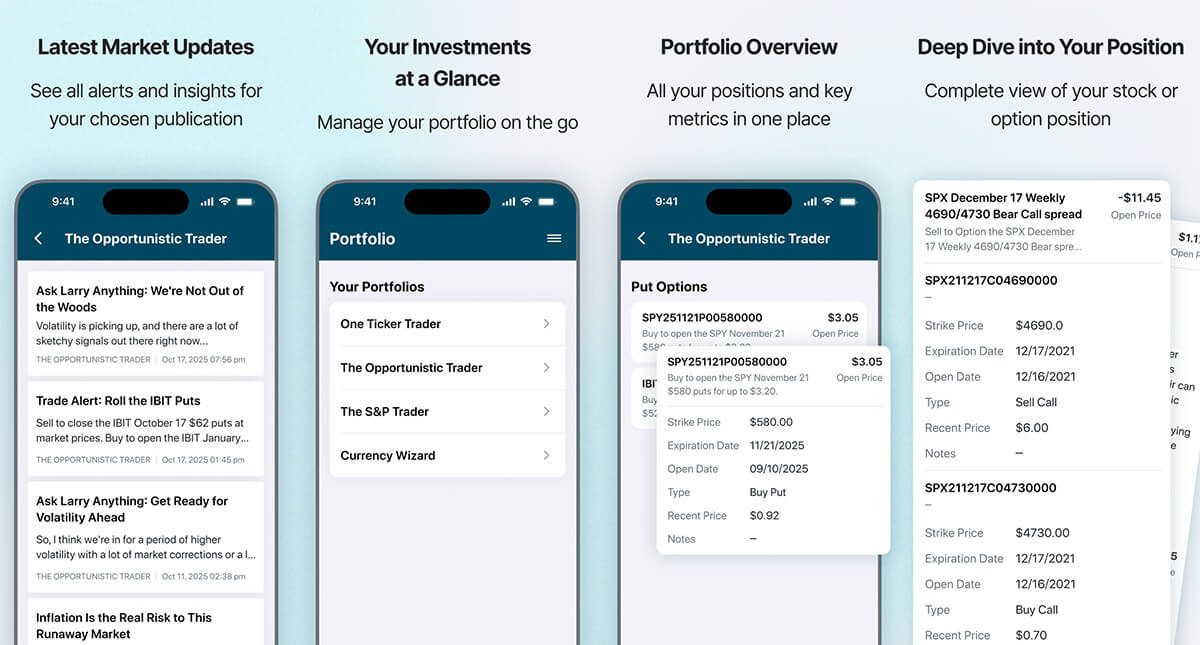
Click the icon below from your mobile device to download The Opportunistic Trader app today for one-tap access to trade alerts, issues, and model portfolios for all of Larry’s services.
|
|
Available in the app store on Android and iPhone.
|
|
|
|















0 Response to "Why Being Right Isn’t Enough in Options Trading"
Post a Comment