
Dressed head to toe in black...
She was known as The Witch of Wall Street.
The newspapers called her cold and heartless. People mocked her as a miser. Investors whispered that she was mad as a hatter… a cruel, outcast who didn’t belong in high society.
They ridiculed her infamous frugality… claiming she lived in boarding houses, only owned one black dress, and pinched pennies until they bled.
But what nobody could deny was that Hetty Green was rich…
When banks were collapsing in the Panic of 1907, it wasn’t just J.P. Morgan who stepped in.
Hetty Green quietly wrote a check for $1.1 million in cash to keep the National Bank of Commerce afloat – a staggering amount of capital in those days that almost nobody else could raise.
When titans of the Gilded Age lost their fortunes, they often turned to Hetty.
And she became one of the era’s most reliable lenders of last resort, demanding collateral but offering liquidity when no one else would.
When New York City couldn’t meet payroll in 1898, it wasn’t the U.S. Treasury that saved them… it was Hetty Green.
And when Manhattan real estate crashed during panics, it was Hetty who scooped up prime properties for pennies, building a fortune while others were ruined.
But Hetty Green’s most famous investment of all… the trade that earned her the greatest fortune – is one that I believe you and I can model.
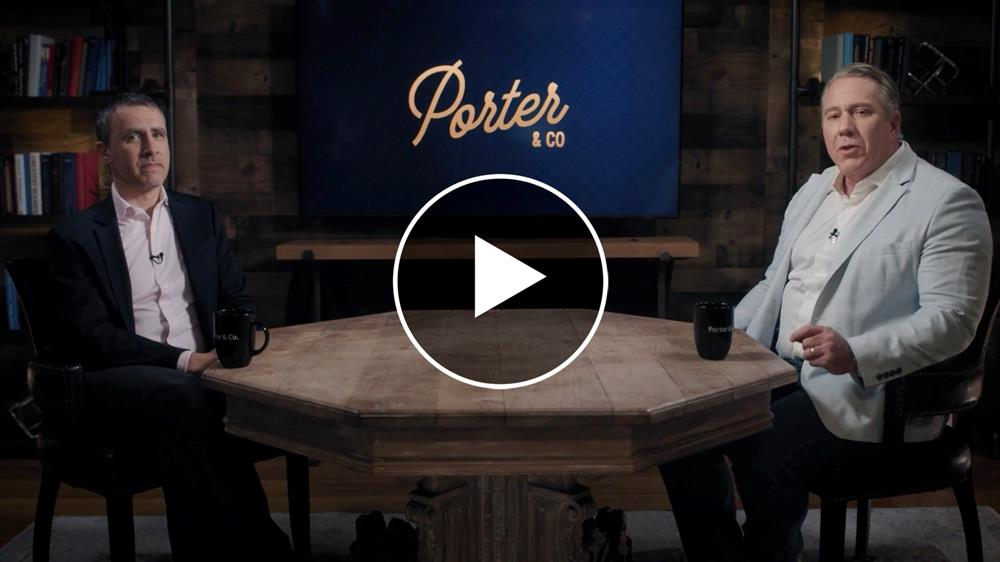
And Erez Kalir and I just sat down to share all the details with you.
Let me explain: During the Civil War, The Union was printing colossal quantities of the paper “greenbacks” to fund the eye watering costs of the war.
The greenbacks weren’t backed by gold or silver, just government credit… basically a promissory note. And even as the war ended, there was still a lot of uncertainty around America’s economic future.
Nobody knew whether or not the government would make good on promises to make good on the greenbacks they had issued so freely.
Which was a fair assumption at the time. The war had devastated vast swaths of farmland. Hundreds of thousands of young men lost their lives.
So, like they often do, people rushed to gold and silver looking for safety and the value of greenbacks dropped as low as 50 cents against the gold-back dollar.
But Hetty Green saw what others couldn’t. She predicted the government would easily be able to honour their debts. She saw that with the war over, the full industrial power of America would be switched on.
Coal, iron, oil, copper, gold, silver… she knew they would all boom as America rebuilt itself from the ashes.
So she bought up all the greenbacks that she could get her hands on, predicting they would eventually be re-valued…
And when the U.S. government did eventually agree to redeem greenbacks at face value, Hetty made an absolute fortune.
In today’s money, we’re probably talking about tens of millions of dollars.
And what Erez and I have discovered is like a modern-day equivalent of this trade. Except it could potentially be far greater because it revolves around what could be the biggest financial story of the century.
At the centre of it all is a multi-billion asset hiding inside a boring blue-chip stock Wall Street has completely mis-priced. An asset that’s worth more than the entire business itself but that is invisible on the books.
And when people wake up to the reality of this mis-pricing… we believe we’re going to see a complete re-valuation of the business that could add billions to its market cap.
Yet, Wall Street isn’t accounting for this outcome.
They’re either ignorant of the opportunity because the company is too obscure or it’s the old Upton Sinclair insight that: “it is difficult to get a man to understand something when his salary depends upon his not understanding it."
Because if those in the financial sector understood the shift happening beneath their feet, they would see it as an existential threat.
Bad news for them. Good news for us.
Because it gives us a rare window of opportunity to get in on what Erez and I believe could be one of the most asymmetric investment opportunities of our careers.
You see, just like Hetty Green spotting a coming reprice in greenbacks, we believe Wall Street could soon wake up to this multi-billion dollar discrepancy.
And when that happens, you could be looking at the type of returns that only come along once in a generation.
When Erez brought this idea to me, I knew we needed to get this to you ASAP. Not only due to the upside potential but because five major catalysts are converging on this story.
Catalysts that Erez believes could catapult this into the mainstream, causing the company to potentially double or triple.
Things are moving so fast that the first one was recently triggered.
Get the full story by going here now.
Good investing,
Porter Stansberry
FedEx Delivers: Guidance Hike Signals Upside in 2026
Authored by Thomas Hughes. Published: 3/21/2026.
Key Points
- FedEx delivered another solid quarter, with the Network 2.0 strategy driving bottom-line results.
- Analysts and institutions support this market, limiting downside with their buying and driving it higher with their 2026 targets.
- Capital return, including an aggressive repurchase plan, aligns with this stock's price outlook, providing leverage for investors.
- Special Report: Elon's "Hidden" Company
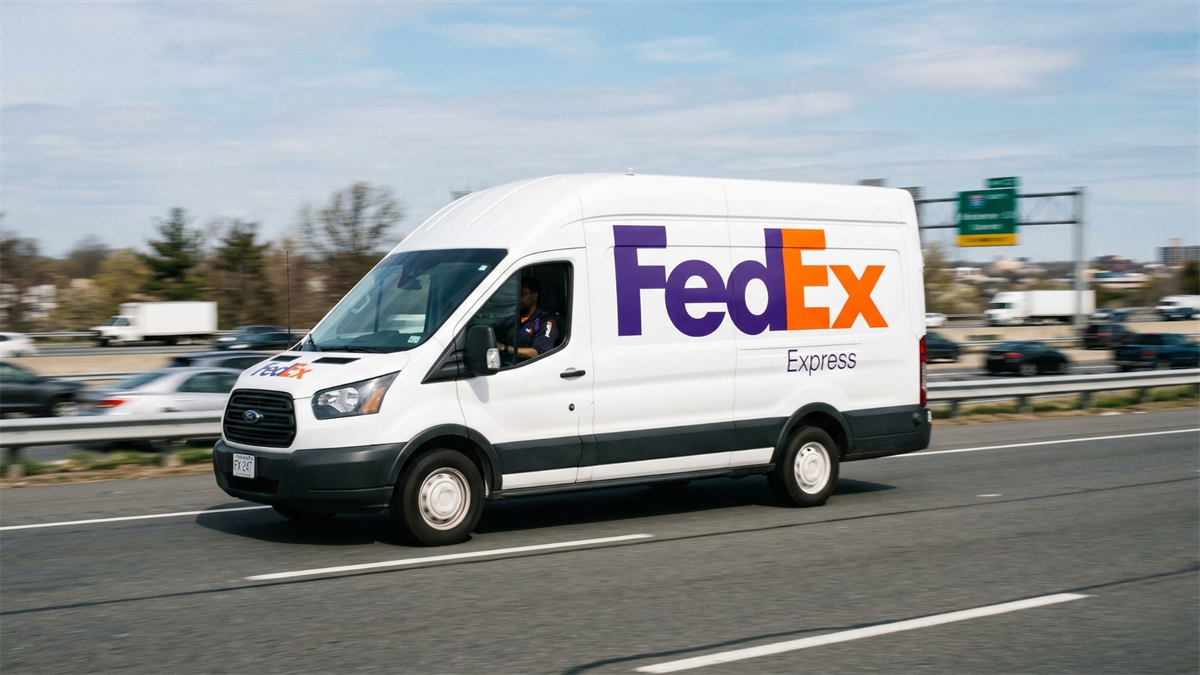
FedEx (NYSE: FDX) faces headwinds like any company in 2026, but its FedEx Network 2.0 strategy and plans to spin off its freight business are showing results. While the freight business continues to struggle amid soft demand, rising costs and industry rationalization, the core Express business is growing, operational quality is improving, and guidance is accelerating. Those bullish business trends support the stock, as do analyst and institutional developments that underpin the rally.
The analyst response to the recent earnings release was favorable: the first revisions MarketBeat tracked increased the price target. The fresh targets affirmed an uptrend in the consensus estimate and an outlook for above-consensus price action, suggesting more than 20% upside from February highs is possible by year-end.
Ground-zero (Ad)
San Francisco is the strangest city in America right now—you can hop into a self-driving car and be chauffeured by a robot, but out the window you see addicts slumped in doorways, open-air drug markets, the mentally ill screaming at the sky, and entire city blocks consumed by homeless encampments. It's ground-zero for the most disruptive technological forces of our age, and Erez lives in the Bay Area plugged into the capital, the connections, and the companies reshaping the world—the advancements in AI, blockchain, computing, and biosciences are unlike anything the world has seen before, and a tsunami of disruption is coming for everything all at once. During our most recent broadcast, we exposed what we're calling the most asymmetric opportunity of our careers: an overlooked financial company hiding a multi-billion-dollar blockchain asset Wall Street hasn't priced in—it's one of those rare situations Warren Buffett would describe as raining gold when all you have to do is step outside if you want to get rich.
Watch the broadcast before the window closes nowAssuming the company continues to perform as guidance and long-term analyst forecasts indicate, the bullish revision cycle should continue to lift estimates and market sentiment for the foreseeable future.
Institutional trends are likewise constructive, revealing a solid support base and accumulating activity.
Data show institutions buying on balance at about a $2-to-$1 pace on a trailing 12-month basis, purchasing quarterly for four consecutive quarters, and ramping activity in 2025 and into Q1 2026. With that support in place, it's no surprise the stock advanced in early 2026 and appears positioned to keep charging into Q2.
FedEx in Rally Mode: Continuation Expected
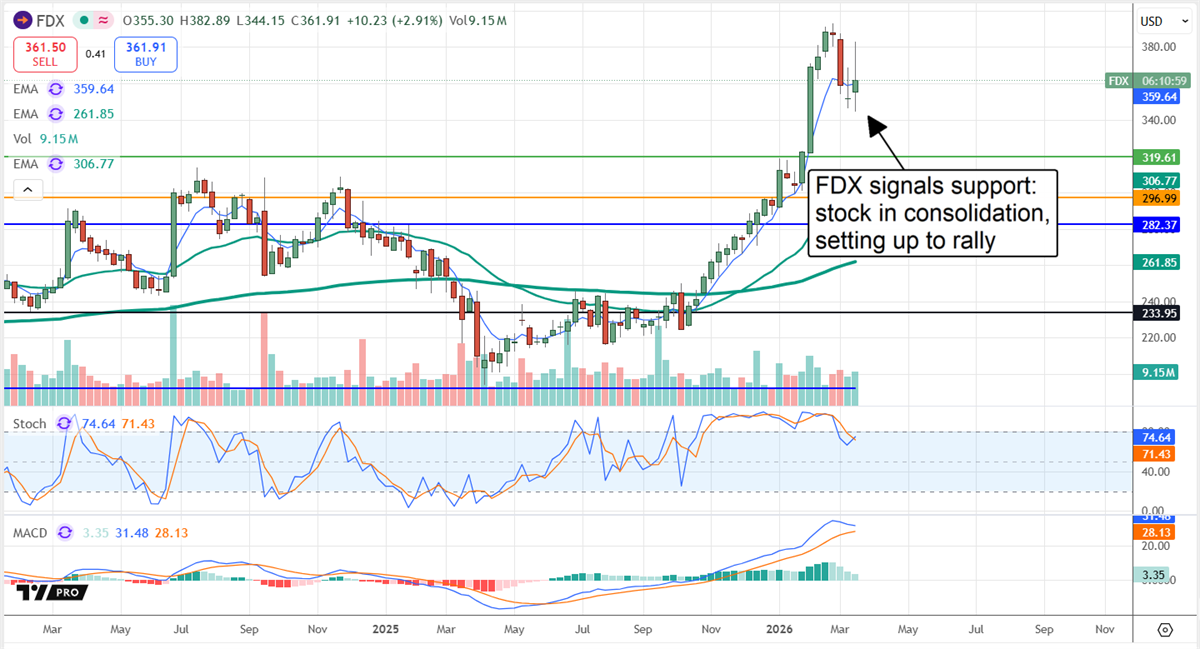
The chart action is suggestive. FDX rebounded from a low in early 2025, established a support base by the end of Q3, began rallying in Q4, and accelerated the move in early 2026. The price pattern resembles a Bullish Flag in progress — a formation that, if confirmed, would bring stronger upside targets into play.
A move to new highs would indicate trend continuation and the potential for gains roughly equal to the height of the Flag Pole in the base case, with an even larger percentage gain in a bullish scenario. That puts the market in the $500 to $555 range, within a few months of setting a fresh high.
Earnings growth, the value-unlocking spinoff, analyst upgrades, and institutional buying are not the only drivers. Cash flow and capital returns are central to investor sentiment — notably a growing dividend and share buybacks.
The dividend is the smaller component, yielding about 1.6% with shares near $360. It is paid at roughly 36% of the low end of the company's earnings-per-share (EPS) target, and both EPS and the payout have been rising. Management has increased the dividend for five consecutive years and appears on track to issue a sixth increase in 2026, likely in the 6% to 8% range.
FedEx: Strong Q3 and Improved Guidance Trigger Robust Market Response
FedEx delivered a solid Q3, with revenue of $24 billion, up 8.1% year over year and roughly 220 basis points above consensus. The strength was led by the Express segment, where volume and yield growth were compounded by structural cost savings. The Freight segment continues to underperform, but not enough to offset the core strength. Importantly, the Network 2.0 rationalization is driving meaningful margin improvement, as incremental operating cost pressures were offset by improved operational quality. The net result: net margin expanded by about 50 bps, driving a 15.6% increase in earnings.
Guidance for Q4 was also solid, though somewhat conservative given Q3's strength. Management raised targets for revenue and earnings, with the low ends of guidance now above prior high ends — forecasting ~6.25% revenue growth at the midpoint and $16.42 in EPS. Both figures exceeded expectations.
The biggest near-term risk for FedEx is fuel costs. Oil prices are roughly 50% higher than the 2025 average as of mid-to-late March, which could erode margins and force price increases. That pressure has yet to be fully reflected in results or outlook. Other risks include geopolitical instability and regional disruptions, plus competition — Amazon (NASDAQ: AMZN), in particular, threatens share as it aggressively expands its delivery capabilities.
3 Companies at the Forefront of the GLP-1 Pill Wars
Submitted by Nathan Reiff. Originally Published: 3/16/2026.
Key Points
- Three companies to watch in the fast-growing GLP-1 space include firms with market capitalizations ranging from about $4 billion to nearly $1 trillion.
- Eli Lilly's size and dominant position allow it to develop multiple GLP-1 medicines and to expand rapidly into many corners of the world.
- Viking Therapeutics and Structure Therapeutics are much smaller, but each has a highly promising GLP-1 candidate working its way through the clinical trial process.
- Special Report: Elon's "Hidden" Company
Though the first GLP-1 agonists date back more than 20 years, it's only in the last couple of years that they have begun to dominate the pharmaceutical space for their massive potential as weight-loss drugs. With some estimates placing the market at nearly $63 billion in early 2026, forecasts call for the GLP-1 industry to roughly triple over the coming decade.
It's no surprise the biopharma industry is racing to capture a share of that growth as GLP-1 use accelerates. Dozens of new GLP-1 receptor agonist medications are in development across nearly as many firms—and it's not just major pharma names getting involved. The medicine is evolving quickly, having already expanded to include oral treatments, including the first-ever FDA approval for a GLP-1 pill for weight loss for Wegovy at the end of 2025. Amid the significant turbulence and hype surrounding this fast-growing space, the companies below may be particularly interesting to watch.
Multiple Products and Geographies Could Cement Eli Lilly's Dominance
Ground-zero (Ad)
San Francisco is the strangest city in America right now—you can hop into a self-driving car and be chauffeured by a robot, but out the window you see addicts slumped in doorways, open-air drug markets, the mentally ill screaming at the sky, and entire city blocks consumed by homeless encampments. It's ground-zero for the most disruptive technological forces of our age, and Erez lives in the Bay Area plugged into the capital, the connections, and the companies reshaping the world—the advancements in AI, blockchain, computing, and biosciences are unlike anything the world has seen before, and a tsunami of disruption is coming for everything all at once. During our most recent broadcast, we exposed what we're calling the most asymmetric opportunity of our careers: an overlooked financial company hiding a multi-billion-dollar blockchain asset Wall Street hasn't priced in—it's one of those rare situations Warren Buffett would describe as raining gold when all you have to do is step outside if you want to get rich.
Watch the broadcast before the window closes nowEli Lilly and Company (NYSE: LLY) is one of the biggest pharmaceutical companies in the world, with a market capitalization approaching $1 trillion as shares have climbed by almost 20% in the last year.
That scale plays to Eli Lilly's advantage as it seeks to expand its GLP-1 agonist program globally. The firm plans to spend $3 billion in China over the coming decade to expand its supply chain and build local manufacturing capacity, including for GLP-1 medications.
These investments would not only enhance its access to China's growing weight-loss market but also help shore up global supply.
Also in China, Eli Lilly recently filed for approval of a new GLP-1 treatment and completed a Phase 1 trial for a related medication.
Last quarter, the company submitted its drug orforglipron, a new GLP-1 agonist, for obesity treatment in the United States and more than three dozen additional countries, with an expected domestic launch by mid-2026. Lilly's large R&D budget has also allowed it to focus on retatrutide, a so-called "triple-agonist" that combines GLP-1 activity with other pathways and is currently in trials.
Eli Lilly is thus positioning itself to dominate the GLP-1 space with multiple products—including in pill form—launched around the world. With 45% year-over-year (YOY) revenue growth in 2025, these efforts could help sustain rapid top-line gains going forward.
Viking's Dual Agonist Drug Shows Potential As It Moves Through Trial Process
A much smaller firm than Eli Lilly, Viking Therapeutics Inc. (NASDAQ: VKTX) has not yet brought a GLP-1 drug to market. Instead, its candidate VK2735, a dual agonist of both GLP-1 and glucose-dependent insulinotropic polypeptide (GIP) receptors, has been advancing through clinical trials. In January 2025, the firm published Phase 2 results for VK2735 showing strong potential, including up to nearly 15% of baseline body weight lost in trial participants without a clear plateau.
Viking is developing VK2735 in both oral and injectable forms and expects to begin Phase 3 trials for the oral formulation in the coming months. So far, the drug's promise has helped VKTX shares rise by nearly 20% in the last 12 months.
However, investors may be concerned about the company's ability to bring this drug to market quickly enough to capture a sizable customer base, given the number of alternatives already available or rapidly progressing through development.
The company is not currently profitable, although as of the latest quarter, it held a healthy $706 million in cash reserves.
Structure's GLP-1 Pill Could Be Big, But Trial Results Will Confirm
Shares of Structure Therapeutics (NASDAQ: GPCR) have far outperformed the other companies discussed, rising by more than 150% in the last year as investor enthusiasm grew for aleniglipron, the firm's GLP-1 agonist candidate.
Analysts still see substantial upside: consensus forecasts imply over 90% upside based on a price target of $107.90.
Compelling results from a Phase 2B trial made headlines in December 2025, and investors are now waiting for additional data.
With anticipation that aleniglipron could be a strong contender in the emerging GLP-1 pill market, investors who take a chance on GPCR shares may be rewarded when new results arrive—though investing in early-stage drug developers remains risky.
to bring you the latest market-moving news.
This email communication is a paid advertisement from Porter & Company, a third-party advertiser of TickerReport and MarketBeat.
Contact Us | Unsubscribe
Copyright 2006-2026 MarketBeat Media, LLC dba TickerReport.
345 N Reid Pl., Sixth Floor, Sioux Falls, SD 57103-7078. United States of America..
0 Response to "One of the greatest trades ever?"
Post a Comment