A different way to approach the market 
CleanSpark Inks a $6.6B AI Lease to Become a Digital LandlordWritten by Jeffrey Neal Johnson on July 15, 2026 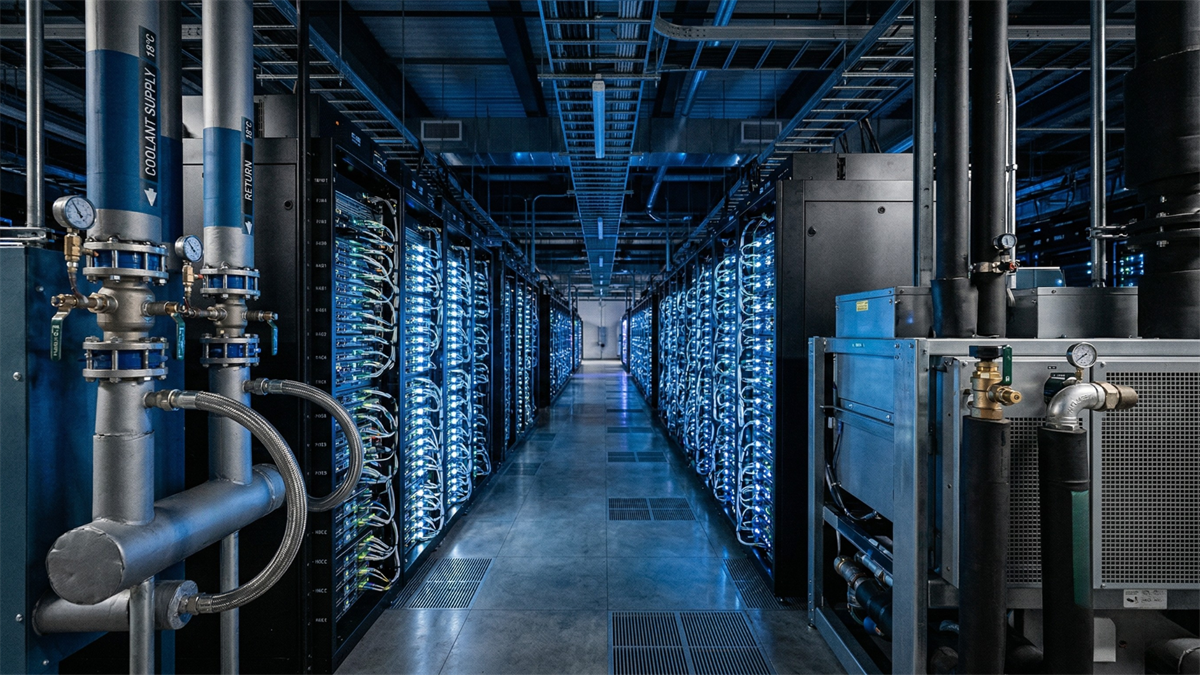
Key Points
- CleanSpark signed a $6.6 billion, 20-year triple-net lease in Sandersville, Georgia, providing 175 megawatts to an undisclosed technology tenant for AI data center use.
- The deal, plus an exclusivity agreement covering an 885-megawatt Texas portfolio, could generate over $1 billion in predictable annual revenue and shift CleanSpark's valuation away from crypto mining cycles.
- CleanSpark faces roughly $1.75 billion to $2.1 billion in Sandersville construction costs and plans to use its 13,941 Bitcoin treasury as collateral to avoid shareholder dilution.
- Special Report: Jensen Huang has sold $1.8 billion in Nvidia stock

The digital gold rush is rapidly giving way to the artificial intelligence land grab. For years, Bitcoin miners amassed vast power portfolios to run high-energy operations. Today, that specific electrical capacity sits at the precise bottleneck that is starving the world's largest technology firms. Power is the new premium real estate, and organizations controlling the grid connection hold the ultimate leverage. CleanSpark (NASDAQ: CLSK) just weaponized this leverage, securing a $6.6 billion, 20-year AI data center lease that decouples its valuation from cryptocurrency volatility. By locking in $330 million in expected annual net operating income, CleanSpark forces Wall Street to aggressively reprice its stock. Once a cyclical miner, the company is rapidly transforming into a premier digital infrastructure landlord.
Alexander Green bought Apple in 1996, recommended Nvidia at a split-adjusted 66 cents in 2004, and picked up Amazon and Netflix under $3 per share in 2005.
Now the chief investment strategist at The Oxford Club has identified three AI stocks he believes could be the most profitable investments of the next decade. Click here to get all three AI stock names from Alexander Green
Cashing in on the High-Performance Compute BoomWhen evaluating infrastructure companies, predictability is everything. CleanSpark recently executed a 20-year triple-net lease at the Sandersville, Georgia, campus. The agreement designates 175 megawatts of critical IT load for high-performance computing and AI workloads. For investors unfamiliar with commercial real estate terminology, a triple-net lease requires the tenant to pay property expenses, including real estate taxes, building insurance, and maintenance. The triple net lease structure shields CleanSpark from operational cost creep. Management projects a near 100% net operating income contribution margin from this arrangement, generating an average of $330 million in annual cash flow once deliveries begin in late 2027. The identity of the tenant remains officially undisclosed, but CleanSpark notes that the partner is a high-investment-grade global technology entity. Recent market whispers suggest Meta Platforms (NASDAQ: META) was in advanced discussions for capacity in Sandersville, adding serious weight to the underlying credit quality of the lease. This specific catalyst caused a severe divergence in the sector. While CleanSpark shares rose almost 9% on July 14, direct competitors lacking similar infrastructure pivots, such as Marathon Digital Holdings (NASDAQ: MARA) and Riot Platforms (NASDAQ: RIOT), saw muted trading. The market is clearly beginning to value gigawatt power capacity as prime AI real estate. The Texas Land Grab: An 885 MW Exclusivity AgreementThe Sandersville facility represents just the pilot program of a much broader strategic overhaul. Embedded within the $6.6 billion agreement is a letter of intent granting the tenant exclusivity over the entire CleanSpark Texas portfolio. This pipeline includes 718 acres of land with up to 885 megawatts of secured and planned power capacity spread across the Sealy and Brazoria campuses. The financial implications of a full deployment are substantial. If 175 megawatts in Georgia translates to $330 million in annual net operating income, successfully contracting the 885 megawatt Texas pipeline under a similar pricing framework could introduce well over $1 billion in highly predictable recurring revenue. By locking up its Texas land under an exclusivity agreement, CleanSpark establishes a clear, multi-year runway to operate at an institutional scale.
Jensen Huang says AI can't scale without it. Google Ventures calls it the future of AI compute. Sequoia Capital - the firm behind Anthropic and OpenAI - calls it a 'holy grail.' It's smaller than a fingertip and made of glass.
Wall Street insider Jason Bodner - who called Nvidia at $4.50 - believes this 'light-speed' device could be bigger for AI than GPUs and is about to launch a new wave of winners. He's sharing his number one stock pick tied to it at no cost. Click here to get Jason Bodner's top pick for free
Funding the Build: Bridging the Capital Expenditure GapTransforming raw land and energy into production-grade AI infrastructure requires tremendous upfront capital. This is where investors should look past the flashy revenue numbers and assess the balance sheet. Management estimates landlord project costs will range from $10 million to $12 million per megawatt of critical IT load. For the 175-megawatt Sandersville buildout, CleanSpark faces capital expenditures of roughly $1.75 billion to $2.1 billion before recognizing revenue in 2027. With trailing net margins at -67%, the immediate question is how CleanSpark will fund this transition without destroying shareholder value through equity dilution. The answer lies in the CleanSpark treasury. CleanSpark holds a reserve of 13,941 Bitcoin (BTC), valued at approximately $878 million at current market prices. Rather than liquidating these holdings or issuing millions of new shares, CleanSpark can leverage this treasury as collateral. Financial institutions are increasingly willing to offer debt financing against digital assets. Securing project-level debt allows CleanSpark to bridge the development gap, severely diminishing the bearish thesis that heavy dilution is the only path forward. Breaking the Cycle: The Shift Forcing Shorts OutWhenever a business undergoes a structural transformation, technical friction often follows. CleanSpark currently carries a high short interest, with roughly 33% of the free float sold short. Institutional bears built these positions around the traditional crypto mining narrative, which includes unpredictable revenue, margin compression during Bitcoin drawdowns, and the constant threat of dilution to fund operations. The Sandersville lease directly attacks the foundation of that short thesis. When a business secures $6.6 billion in contracted revenue from an investment-grade tenant, the valuation model shifts. Analysts no longer apply cyclical crypto multiples; they instead apply premium digital real estate valuation frameworks. While some analysts look for chart breakouts to trigger a short squeeze, others understand that a sudden change in the underlying business model can also fuel violent upside moves. With a heavily skewed bullish options chain and over 78 million shares sold short, the risk of forced covering is elevated. Short sellers are stepping in front of a business that just secured decades of guaranteed cash flow. Closing Costs: Assessing the Digital Real Estate HorizonThe transition from mining to hosting is not without risk. The regulatory filings detailing the triple-net lease outline strict, milestone-based delivery covenants. CleanSpark must execute its construction and power integration flawlessly over the next 18 months, as failure to meet these deadlines could result in significant rent abatements or the termination of the lease. The multi-quarter latency period before revenue recognition in 2027 means the income statement will not reflect this $6.6 billion victory for quite some time. Despite execution risks, securing a multi-decade commitment from a tier-one technology titan validates the broader land-and-power strategy. Investors looking to capitalize on the AI compute bottleneck might consider adding CleanSpark to their watchlist to monitor how management secures project financing and executes early construction milestones in Georgia. Read this article online › Recommended Stories
Did you find this article helpful?  
|


0 Response to "CleanSpark Deal Could Generate Over One Billion In Annual Revenue"
Post a Comment