Managing Editor’s Note: Tonight at 8 p.m. ET, Jason Bodner is about to uncover shocking details about an obscure stock market anomaly called the Nasdaq “glitch.” In the past, his research flagged Nvidia before it rose more than 5,000%. It spotted Super Micro Computer before it soared 2,601%.
The “glitch” is set to trigger again on August 14. So if you want to make sure you’re primed and ready to act on the next opportunities, make sure you tune in to tonight’s event. Click here to confirm your spot instantly.
How Leverage Turns a Normal Pullback Into a CrashBy Larry Benedict, editor, Trading With Larry Benedict Throughout my four-decade career, I’ve seen countless bull markets come and go. They typically don’t end because investors stop believing in the story. More often than not, investors get too confident. They convince themselves that the bull run is never going to end. The early stages of a bull market are usually driven by improving fundamentals. Companies become more profitable, and economic conditions improve. It’s the type of environment where investors are rewarded for taking sensible risks. But after a sustained period of rising prices, investors often undergo a subtle shift. Simply owning quality stocks with good profits is no longer enough. People start looking for ways to amplify their returns. They borrow money to buy more stocks, increase their position sizes, or use leveraged ETFs to gain more exposure. As markets continue climbing, these decisions are rewarded, reinforcing the belief that taking more risk is simply part of successful investing. However, this is often the point where serious risks grow…
Why Leverage Changes EverythingBull markets are driven by optimism about a compelling investment narrative and growing confidence that the story will continue to play out. Leverage pours more fuel on the fire. The real problem is what happens when sentiment changes. An investor who owns shares outright can usually ride out a correction. But someone who has borrowed heavily or bought into a highly leveraged ETF doesn’t have that same luxury. As prices begin to fall, they’re often forced to liquidate their positions. That’s when a normal pullback can quickly morph into something more severe. And it doesn’t just affect retail investors. Hedge funds, institutions, and systematic (or algorithm-driven) strategies can also be forced to reduce exposure as volatility rises or internal risk parameters are breached. Whatever the trigger, the result is the same. Selling creates more selling as investors de-leverage, amplifying what might otherwise have been an ordinary correction. Markets don’t collapse because everyone has changed their minds at the same time. Often, leveraged investors no longer have a choice. Changing market conditions force them to sell.
Tune in to Trading With Larry Live 
Each week, Market Wizard Larry Benedict goes live to share his thoughts on what’s impacting the markets. Whether you’re a novice or expert trader, you won’t want to miss Larry’s insights and analysis. Even better, it’s free to watch. Visit us on YouTube to catch the latest! |
What I Look For Before a CorrectionTo be clear, investors don’t have to avoid leverage altogether. Used carefully and with proper risk controls, it can be an effective tool. But what matters is recognizing when leverage starts becoming the default way to make money – when people are more focused on juicing their returns than risk management. That’s why I pay close attention when wild speculation starts dominating the fundamentals. It’s a clear sign that the market is becoming too hot, and that a correction might not be far away. You don’t have to predict when a bull market will peak. In fact, trying to pick the top is usually a losing game. But when investors no longer believe that owning great stocks is enough – and reach for leverage to squeeze every last dollar out of the market – that’s often when risk starts outweighing reward. It’s a pattern at the late stages of many bull markets. It’s one of the biggest lessons I’ve learned throughout my career. And it’s just as relevant today as it was when I took my first step onto a trading floor. Regards, Larry Benedict
Editor, Trading With Larry Benedict
Get Instant Trade Alerts on Mobile! 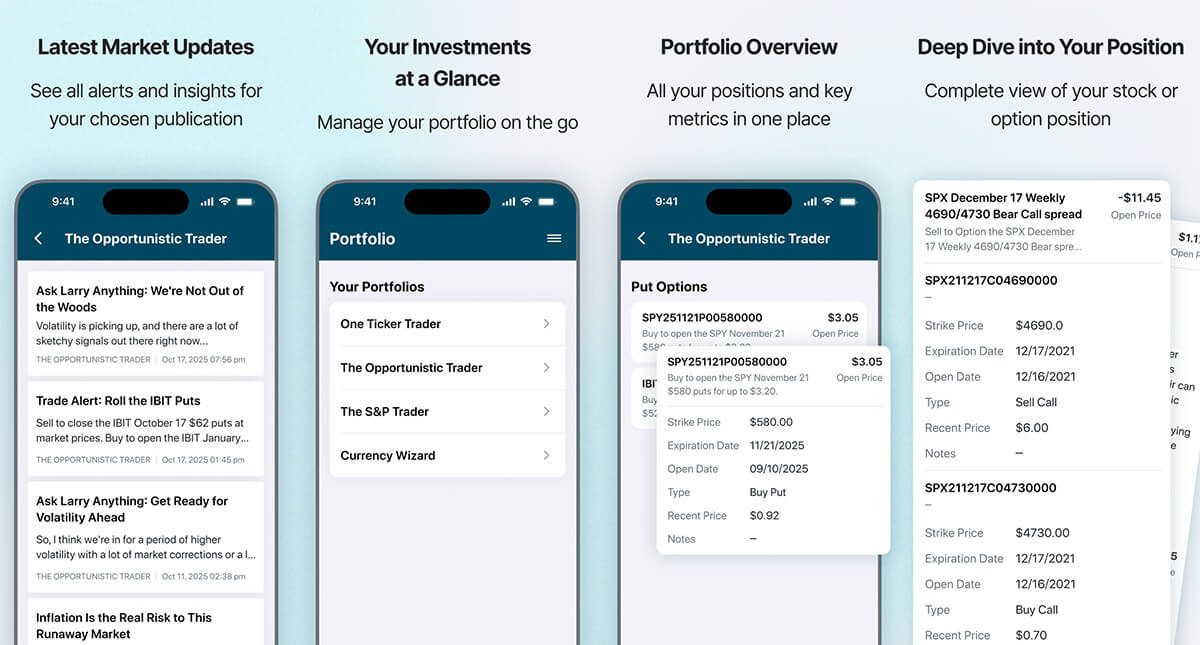
Click the icon below from your mobile device to download The Opportunistic Trader app today for one-tap access to trade alerts, issues, and model portfolios for all of Larry’s services.
Available in the app store on Android and iPhone.
|
|








0 Response to "How Leverage Turns a Normal Pullback Into a Crash"
Post a Comment