|
Black Friday will be darker for America after this crisis 
Bankable Batteries: Energy Vault's $78 Million Deal Signals a Strategic Shift
Written by Jeffrey Neal Johnson on November 25, 2026
Key Points
- Energy Vault secured $78 million in non-recourse financing for its 150-megawatt SOSA battery storage facility in Texas, signaling institutional confidence in the project.
- The company's backlog reached about $2.3 billion, and it raised 2026 revenue guidance while expanding its pipeline through a 2.3-gigawatt portfolio acquisition from Goshe Energy Storage.
- Despite positive analyst target hikes and an executive stock purchase, Energy Vault faces execution risk from negative net margins, high debt, and tight liquidity.
- Special Report: I'm handing you this one free

The proliferation of intermittent renewable energy sources like wind and solar creates a structural challenge for regional power grids. When the wind stops blowing or the sun goes down, energy production drops while consumer demand often remains high.
Grid operators increasingly rely on utility-scale battery storage to bridge this gap, smoothing out the supply curve and helping prevent blackouts. For years, these battery projects were viewed as experimental or heavily dependent on government subsidies.
Today, the economics are changing. Falling battery costs and revenue opportunities from frequency regulation have transformed grid-scale storage into a bankable infrastructure asset class. Investors looking at the energy transition may want to evaluate companies that can secure project financing and execute these large-scale deployments. Energy Vault Holdings, Inc. (NYSE: NRGV) is navigating this shift, having recently secured institutional backing for a key Texas facility.
Bill Poulos is offering his $247 Instant Scanner for $7 in the Black Friday sale. It's one payment for a full year, with no re-bills and nothing to install.
The catch? He isn't trying to profit on the scanner itself. Poulos is betting that once you see it deliver the night's list, you'll want more of his work for years.
See the Instant Scanner in action and claim the $7 Black Friday deal today.
Catching the Spark: Arbitrage in the Texas Power Market
The Texas power grid, managed by the Electric Reliability Council of Texas (ERCOT), operates as a largely isolated grid with a deregulated wholesale electricity market. This structure creates a unique environment where wholesale electricity prices can fluctuate widely based on real-time supply and demand. During peak demand periods, such as hot summer afternoons, power costs can increase significantly. Conversely, during periods of high wind generation and low demand, prices can drop near zero.
This pricing volatility creates a natural economic opportunity for energy arbitrage. A utility-scale battery facility can draw power from the grid when electricity is cheap and discharge it back into the grid when prices peak.
Beyond basic arbitrage, these storage systems provide essential ancillary services, such as frequency regulation, which helps maintain the electrical grid's physical stability. These additional revenue opportunities help attract institutional capital, shifting battery storage from a conceptual technology to a core infrastructure requirement.
Bankable Batteries: Why Non-Recourse Debt Matters
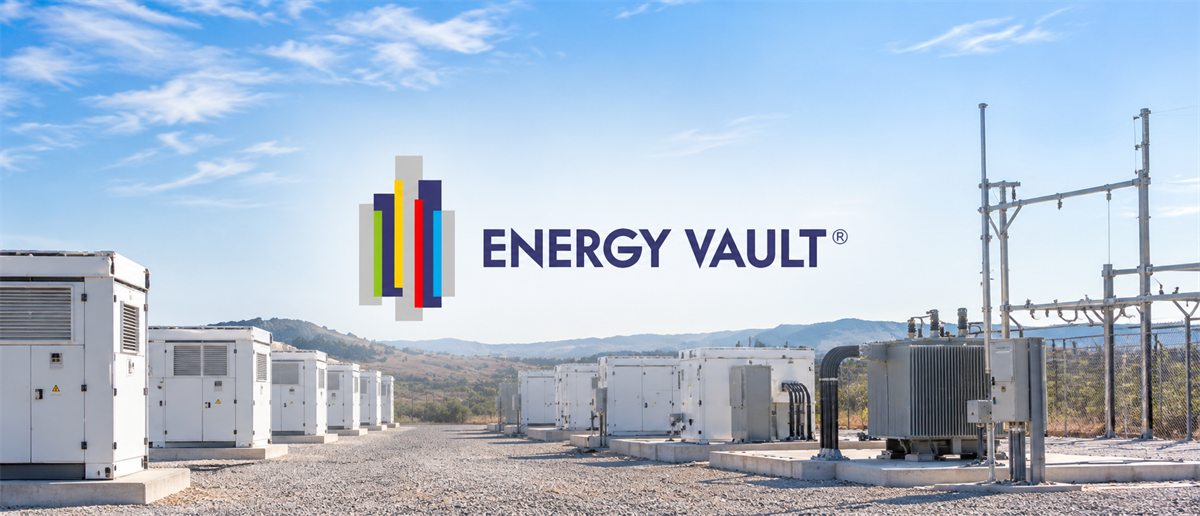
The transition from concept to cash flow requires substantial capital, and securing that capital serves as a market test for a project's viability. Energy Vault recently closed a $78 million construction and bridge financing package for its SOSA Energy Center, located in Madison County, Texas. This facility is a 150-megawatt, 300-megawatt-hour battery energy storage system designed specifically to serve the ERCOT North region.
The financing structure provides insight into the project's perceived risk. The bridge loan will be repaid through a committed $80 million preferred equity investment once the facility reaches commercial completion, currently targeted for the third quarter of 2027.
Notably, this is non-recourse financing. In non-recourse structures, the lender is only entitled to repayment from the profits of the specific project being funded, not from the parent company's broader assets. Securing non-recourse debt indicates that institutional lenders have confidence in the project's underlying economics and committed equity funding.
Management projects $250 million to $300 million or more in long-term revenue from the SOSA facility. The facility targets recurring EBITDA margins of 65% to 75%. Energy Vault plans to operate the facility on a merchant basis upon completion, meaning it will actively trade power in the open ERCOT market rather than relying entirely on a fixed-price contract. Retaining this merchant flexibility lets Energy Vault capture higher electricity prices during periods of peak demand, while leaving the door open to secure contracted agreements if regional market conditions change.
Porter Stansberry flew the Porter and Co. team 3,300 miles to Dublin to investigate a 17-year investing experiment called Project Prophet - and documented everything on film.
Rooted in the laws of physics, this quantitative approach challenges conventional wealth-building wisdom. With 17 years of verified data behind it, Porter calls it unlike anything he has seen in nearly 30 years in the business.
Watch the full investigation and decide for yourself
Scaling the Grid: Buying Growth to Accelerate Timelines
Securing individual facility financing aligns with a broader expansion of Energy Vault’s development pipeline. In its third-quarter financial report, management detailed a project backlog reaching approximately $2.3 billion. A growing backlog provides a layer of revenue visibility, suggesting that customer demand for utility-scale energy management solutions is scaling upward. Along with this backlog update, the company reaffirmed its previously raised full-year 2026 revenue guidance of $290 million to $310 million.
To support this physical rollout, Energy Vault is actively acquiring developmental assets. In late September, Energy Vault acquired a 2.3-gigawatt battery storage portfolio from Goshe Energy Storage. By purchasing existing portfolios, infrastructure developers can often reduce delays associated with early-stage site acquisition, grid interconnection, and environmental permitting.
This strategy can accelerate the timeline to commercial operation. The 150-megawatt SOSA project represents just one piece of this much larger U.S. pipeline strategy, highlighting a corporate pivot toward owning and operating yielding infrastructure assets rather than simply supplying the technology to other developers.
Recharging Sentiment: Technical Tailwinds and Target Hikes
When analyzing business model shifts, tracking the alignment between management actions and institutional sentiment can provide valuable context.
Coinciding with the recent financing announcement, Form 4 filings with the Securities and Exchange Commission show that CEO Robert Piconi purchased 15,000 shares of common stock on the open market, totaling $39,150. Open-market purchases by corporate executives often signal confidence in the company's prospects.
The sell-side analyst community has also adjusted its models following the recent earnings and project updates. Cantor Fitzgerald has a price target of $12, while Citigroup raised its target to $5.
Across seven analysts providing coverage, the average 12-month price target sits at about $6.89, providing solid potential upside from recent trading ranges.
Grounding the Trade: Managing Infrastructure Execution Risk
While the unit economics of individual battery projects appear promising, corporate execution remains the primary variable for investors to monitor. Transforming a $2.3 billion backlog into realized revenue requires navigating complex supply chains, managing heavy construction timelines, and maintaining adequate corporate liquidity.
Energy Vault’s balance sheet reflects the heavy capital requirements of infrastructure development. Its trailing net profit margin is approximately negative 54%, and the company ended the third quarter with about $281 million in debt and a stockholders' equity deficit of $12.4 million. Short-term liquidity is also tight, reflected in a current ratio just under 1. These metrics underscore the necessity of stringent project management. Any significant construction delays for the SOSA facility could strain the company's financial modeling and push back the transition to positive cash flow.
The successful capitalization of the Texas project demonstrates that institutional capital is ready to support merchant battery storage as a viable infrastructure class. As the physical grid continues to evolve and modernize, investors evaluating the renewable energy transition may want to add companies with expanding storage pipelines and access to project financing to their watchlists.
Read this article online ›
Further Reading


Did you like this article?
 
|



0 Response to "Energy Vault's Growing Backlog Meets a Tight Balance Sheet"
Post a Comment