The Fed Hiked Rates... The Market CheeredBy Rob Spivey, director of research, Altimetry
 Kevin Warsh's Federal Reserve recently did something the central bank hadn't done in more than three years... Kevin Warsh's Federal Reserve recently did something the central bank hadn't done in more than three years...
On September 16, the Fed unanimously raised interest rates by 0.25%, bringing its target range to 3.75% to 4%. Investors normally hate that kind of news. Higher rates make mortgages, corporate debt, and other financing more expensive. They also increase returns on bonds and cash... which can make stocks look less attractive by comparison. And yet, the market didn't plunge. It's even up 2% since the announcement. That's because there's an important second part to this story... Fed Chair Warsh didn't raise rates because the economy is falling apart. If anything, his own "economic dashboard" shows the opposite. Warsh is watching many of the same signals we are...A few weeks before the Fed meeting, he laid out the indicators he relies on most to measure the economy's health: corporate investment... earnings... credit... and inflation. Here at Altimetry, we track many of those same indicators. And outside of inflation, the economy looks remarkably healthy... Let's start with corporate investment. Warsh pays close attention to how much businesses spend on equipment, technology, and other long-lived assets. Those are the assets that lay the groundwork for future growth. Nonresidential fixed investment – business spending on things like buildings, equipment, software, and other productive assets – grew 8.5% annualized in the second quarter. Over the past four quarters, investment in equipment and intellectual property has grown around 9%... the fastest pace since 2023. Warsh estimates more than half of this year's capital-spending growth is tied to the AI build-out. Take a look... 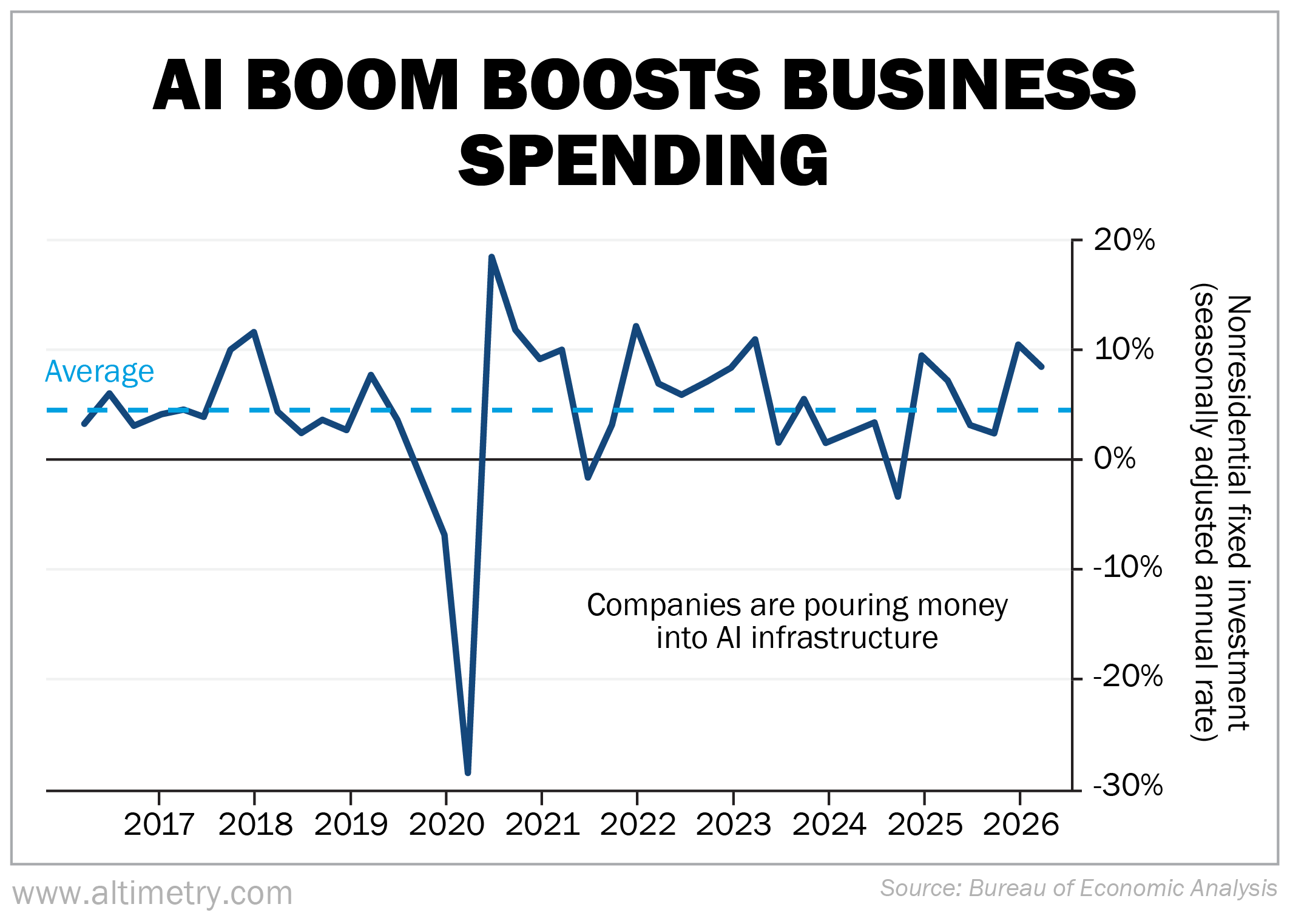
That is not what corporate America does when it expects the economy to roll over. And investment is only one of Warsh's key indicators...Corporate profits are holding up, too. After-tax corporate profit margins reached 19.4% in the second quarter, the highest level since the 1940s. Warsh also noted that S&P 500 profits have grown more than 20% over the past year. Credit tells the same story...
| Recommended Links: |
|
 Is Elon Building an AI Device to Kill the iPhone? Apple lovers take note: A former hedge-fund analyst is stepping forward with the untold story behind Elon Musk's rumored new AI phone and sharing why this could be the moneymaking opportunity of the decade. He pulled all the government filings, trademarks, and deal notes to prove what's coming. Get a first look at the device, plus the name and ticker of the one stock this tech expert says is at the center of it, here. |
 |
| Dr. Ron Paul: 'This Is Going to End Badly' Twelve-time Congressman Dr. Ron Paul spent decades warning Washington about debt, banks, and government overreach. Now, he says something even more dangerous is taking shape. A new government experiment is reaching directly into the stock market. That's why he's urging families to consider three specific money moves now. Get the full story here. |
 |
|
Warsh specifically highlighted the Senior Loan Officer Opinion Survey ("SLOOS"), which regular readers know well. It's a quarterly survey that asks bank loan officers whether they're making it harder or easier for businesses to borrow. Right now, banks are reporting easier commercial and industrial (C&I) lending standards relative to history. And companies are taking advantage of that access to credit. C&I lending is now growing around 10% year over year. In short, Warsh is seeing plenty of green lights. But there's one major exception...Inflation. The Fed's preferred inflation measure is the Personal Consumption Expenditures ("PCE") price index. In July, core inflation was still running at 3.3% year over year, well above the Fed's 2% goal. More than half of the goods and services in the index were still seeing price increases above 3%. That's the problem Warsh is trying to solve. A strong economy gave him room to hike rates without doing serious damage. And he can keep leaning against inflation without immediately having to rescue the rest of the economy. Investors are still preparing for the possibility of additional hikes. But the Fed now has a reason to wait and see whether this first hike does the job. If inflation starts cooling while investment, earnings, and credit remain healthy, there's little reason to rush into another move. This rate hike is a sign of strength, not weakness...Higher rates are something to keep an eye on. But the reason behind this hike matters more than the hike itself. And so far, it hasn't changed the economic cycle underneath the market. Companies are still investing. Banks are still lending. And earnings are still climbing. The Fed isn't slamming the brakes on a fragile economy. It's tapping them on one that's running hot. Those are two very different situations. And the market's reaction tells us investors understand the difference. And we agree. Regards, Rob Spivey
October 6, 2026
|


0 Response to "The Fed Hiked Rates... The Market Cheered"
Post a Comment