
You are a free subscriber to Me and the Money Printer. To upgrade to paid and receive the daily Capital Wave Report - which features our Red-Green market signals, subscribe here. Money Printer 205: What’s the Hell is a CLO?Let's talk more about Blue Owl and why sort of whiskey you'll need to understand finance.
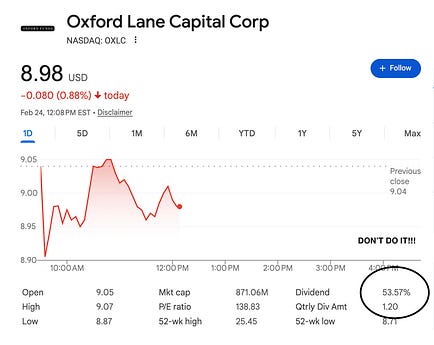
Dear Fellow Traveler, Yesterday in Money Printer 204, we talked about liquidity mismatches. Basically, a money manager promises you can get your money back, but the things the fund owns can’t be sold fast enough to keep that promise (redemption). When enough people figure this out at the same time, the redemption door closes. Today we need to go one level deeper… The loans that these private credit funds are making... the ones that caused Blue Owl to panic... don’t just sit in one place. They are packaged, sliced, and resold to other investors through a CLO. What’s a CLO? Only the coolest thing in modern finance. The ConceptCLO stands for Collateralized Loan Obligation. I know CLO sounds like something designed to make your eyes glaze over... It is. The more complicated the name, the fewer questions people ask. But the concept itself isn’t that hard once you see the moving parts. A bank or a private credit fund makes a bunch of loans to companies... maybe 200 or 300 different loans to mid-size businesses that need money to operate. Each loan pays interest… There's a risk the borrower won’t pay it back, which is straightforward enough. But instead of holding all those loans on their own books, the lender bundles them together into a single pool of assets, and that pool is the CLO. Then, because finance is such a wonderful game of hot potato, pushing risk off to someone else, the lender sells slices of that pool to other investors. Those investors buy the slice that represents the level of risk they’re willing to take. Some loans are riskier than others. The safest slice is called the “AAA tranche,” and it gets paid first, before anyone else. If some of the loans in the bigger pool go bad, the AAA investors are the last to feel it, because losses are absorbed by the riskier slices below them... which is why pension funds and insurance companies exclusively buy AAA CLO tranches. They’re considered extremely safe, and historically they have been. The default rate on AAA CLO tranches has been essentially zero for decades. But somebody has to be at the bottom, taking on the higher-risk loans. Somebody must own that meaty slice that absorbs all the first losses… This whole position would get wiped out before anyone else takes a haircut… That slice is called the “equity tranche.” The equity tranche is where things get interesting, because it’s also where the biggest yields come from... if the loans perform well and nobody defaults, the equity tranche investor gets paid last… BUT ALSO gets paid the most. Those annual yields are typically marketed at north of 15%… Now that’s a lot of yield, right? But it’s there for a reason. To put 15% into context, the 10-year Brazilian bond yield pays 13%… That yield is the bait, because the risk is that you’re first in line to lose everything. Why This Matters Right NowJust think… real quick… somewhere in New York, there’s a guy telling a woman at lunch about these things and how he manages them… She’s unimpressed. The CLO market has roughly doubled since 2019, and there are now over $1.3 trillion in outstanding CLOs globally, according to S&P and JPMorgan estimates. That figure takes it out of a niche product category... Most of the growth has happened at the bottom of the stack, in equity and mezzanine tranches. That’s because investors are constantly chasing income in a world where safe-haven assets aren’t generating much yield and fiat currencies are getting rocked. Well… wouldn’t you know it… There are publicly traded funds that allow retail investors to buy CLO equity... Eagle Point Credit Company (ECC) is probably the most well-known, and Oxford Lane Capital (OXLC) is the other big one. These funds have been paying massive dividend yields, sometimes north of 20%, and retail investors have been piling in because that number looks incredible on a screen. This is the latest thing to pop up on my Google screen today…
Of course, look at the charts, and then have a tall, warm glass of Mellow Corn.
In mid-2025, Eagle Point slashed its dividend by 57%, and Oxford Lane cut by roughly 50%. Share prices naturally cratered on the back of this decision. What happened? The loans underneath the CLOs started defaulting at higher rates, and the equity tranche... the first-loss slice... started absorbing those losses exactly the way it was designed to. The structure worked perfectly, but it didn’t go in the direction the investors hoped. This is happening during a period when the economy is supposedly fine, with low unemployment and positive GDP. If CLO equity is getting hammered now, imagine what happens when we get a downturn and companies start defaulting in clusters rather than one at a time. Here’s one more fun fact… Last quarter, Eagle Point deployed $184 million in new capital. But $147 million of it went to non-CLO credit assets. The flagship CLO equity fund is actively rotating 80% of its new capital out of CLO equity. What does that tell you? The people closest to the risk are quietly backing away from it. The Leverage ProblemIn What the Hell is That Volume 1, we talked about what leverage does. It amplifies everything. When the loans perform, that leverage turns a 6% loan yield into a 20% equity return, which looks beautiful. CLO equity is likely operating at roughly 8 to 12 times leverage (meaning $8–$12 of loans sit above every $1 of equity). How’s that Mellow Corn tasting? Have another… When the loans start going bad, that same leverage turns a 3% default rate into a 30% loss for the equity holder. The math works the same in both directions, even though people only seem to remember the good one… and still keep seeing 57% yield and smash the buy button. This should feel familiar to anyone who learned about mortgage-backed securities in the wake of the 2008 Crisis or when you watched The Big Short.  The structure was different, but the basic idea was the same. Banks take a pool of loans, slice them into tranches, sell the riskiest bottom slice to investors chasing yield, and use massive leverage to juice returns. When the underlying loans went bad, the equity got vaporized, and the pain started moving up the stack. To be clear, CLOs are not subprime MBS. The underlying loans differ, the structures offer better protections, and AAA CLO tranches are much safer. But the equity at the bottom is playing the same game… Fast and loose… Remember, the people who structure and manage CLOs collect fees on the entire pool, not just the equity slice, and the CLO manager gets paid whether the equity investor makes money or not. The arranging bank gets paid upfront, the institutional investors in the AAA tranche get their safe, predictable return, and the equity holder at the bottom gets whatever is left over... which, in good times, is a lot and, in bad times, is nothing. If you’re a retail investor buying CLO equity through a fund like Eagle Point or Oxford Lane, you’re sitting at the very bottom of a leverage structure that was built to protect everyone above you at your expense, and that’s not a conspiracy... It’s the design in the documents. The AAA tranche was supposed to be safe, and the way it stays safe is by feeding your money into the furnace first. What You Can Do With This
And as always... understand where you sit relative to the money. That’s the basic rule of this stuff… Stay positive, Garrett Baldwin About Me and the Money Printer Me and the Money Printer is a daily publication covering the financial markets through three critical equations. We track liquidity (money in the financial system), momentum (where money is moving in the system), and insider buying (where Smart Money at companies is moving their money). Combining these elements with a deep understanding of central banking and how the global system works has allowed us to navigate financial cycles and boost our probability of success as investors and traders. This insight is based on roughly 17 years of intensive academic work at four universities, extensive collaboration with market experts, and the joy of trial and error in research. You can take a free look at our worldview and thesis right here. Disclaimer Nothing in this email should be considered personalized financial advice. While we may answer your general customer questions, we are not licensed under securities laws to guide your investment situation. Do not consider any communication between you and Florida Republic employees as financial advice. The communication in this letter is for information and educational purposes unless otherwise strictly worded as a recommendation. Model portfolios are tracked to showcase a variety of academic, fundamental, and technical tools, and insight is provided to help readers gain knowledge and experience. Readers should not trade if they cannot handle a loss and should not trade more than they can afford to lose. There are large amounts of risk in the equity markets. Consider consulting with a professional before making decisions with your money.
|








Subscribe to:
Post Comments (Atom)
0 Response to "Money Printer 205: What’s the Hell is a CLO?"
Post a Comment