| | | Masquerading as an Ad Company | | | |
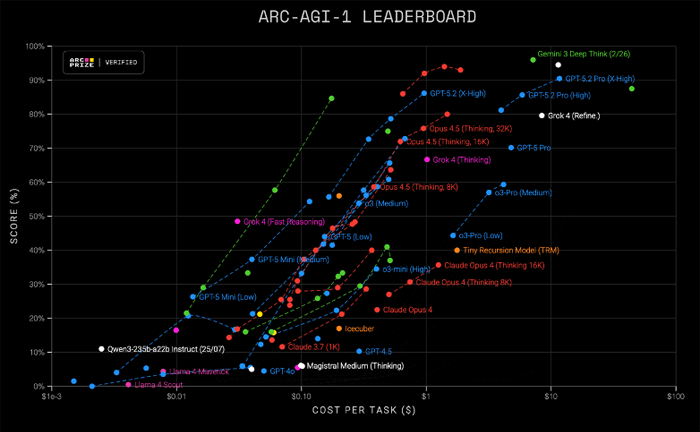
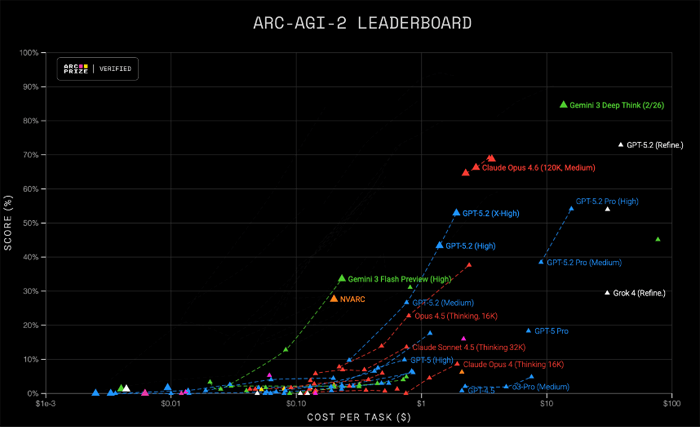
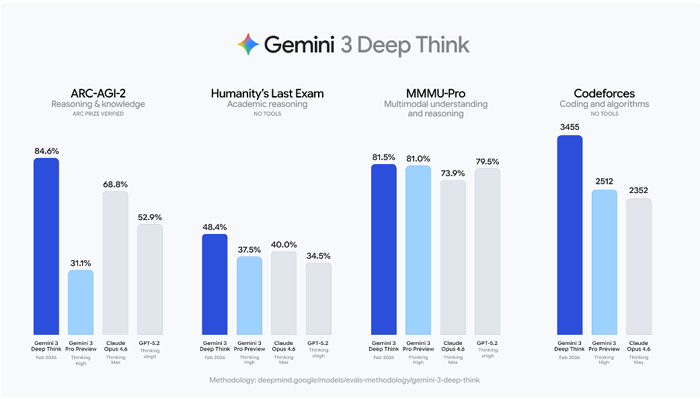
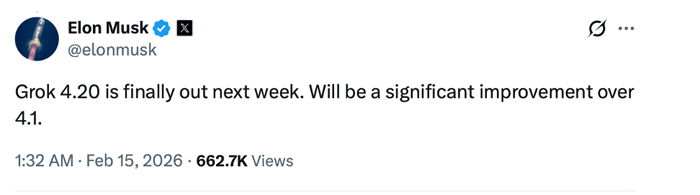
If we were to ask most people on the street, "What kind of company is Alphabet (GOOGL)?"… | | The majority would reply: "It's a search company." | | They wouldn't necessarily be wrong. | | That's certainly the "product" that Google initially became so well known for. | | Some might also say, "It's famous for search, and it also has Gmail, Drive for storage, Docs, Sheets, all that Google Workplace stuff." | | Not wrong, again. | | A response like that would likely come from someone in the workforce whose company uses Google's cloud-based enterprise software to save money on software services. | | A more tech-focused response would also include a reference to Google's Cloud services, one of the largest cloud service providers after Amazon Web Services. It is an absolutely massive business that generated $58.7 billion in revenue for Google in 2025. | | And from a financial analyst on Wall Street, we'd likely get a completely different answer. | | They'd say, "Google is first and foremost an advertising company." | | After all, about 85% of all of Google's revenues came from selling access to Google's decades of data collection on all of us to generate advertising revenues. That's Google's business model. | | The other 14.5% is Google Cloud revenues. The remaining amounts are insignificant. | | So it's an advertising company, right? If 85% of its revenues are from advertising… | | Ironically, the most accurate answer is, "None of the above." | | PMax | | Google is one of the most successful artificial intelligence companies in the world. | | It's an AI company. | | Consider this: Google's flagship advertising technology, known as Performance Max – known colloquially among digital marketers as "PMax" – is entirely driven by AI. | | It uses AI to manage the bidding for ads, for audience targeting, and creative placement of ads across all of Google's media assets, like YouTube, Google Search, Gmail, etc. | | Google uses artificial intelligence to analyze millions of real-time bits of information on consumers to autonomously set the bid price for each individual advertisement. | | This bidding and matching process using machine learning, a form of AI, started around 2015 when Google replaced the old manual keyword-based bidding with an automated system using machine learning. | | Naturally, the employment of AI became more and more sophisticated as the years passed. | | Google's AI was soon able to understand the context and intent of a user's search query, enabling even more precise matching of ads most relevant to a search query. | | Today, almost all of Google's advertising platform is empowered by AI. | | And it's not just advertising software. | | Back in 2016, Google developed the first of what is now seven generations of semiconductors, known as Tensor Processing Units (TPUs), that were invented for machine learning and optimized for Tensor Flow, an open-source software stack designed by Google for building AI models. | | | | Google TPU v7 (Ironwood) | Source: Google | | Above is a picture of Google's seventh-generation TPU – Ironwood – which it uses Taiwan Semiconductor Manufacturing (TSM) for manufacturing these semiconductors. | | But aside from Google's AI ad technology and its custom AI semiconductors, the largest and most ambitious project using AI has been developing its frontier AI models, the latest of which is known as Gemini 3 Deep Think. | | | | Blowing Through Benchmarks | | Without question, Google will be one of a handful of companies that achieve artificial general intelligence (AGI) within the next 12 months. | | In fact, some are already arguing that it's here. | | It's not, but it is very close. | | I don't blame them, though, for having that opinion… | | Just look at the performance metrics that Google's Gemini 3 Deep Think has generated. | | The first is the ARC-AGI benchmarks. | | The ARC-AGI benchmarks are designed to be a measure of general intelligence. The ARC-AGI organization defines AGI as: | | | A system that can efficiently acquire new skills outside of its training data. | | | | It's a reasonable, and surprisingly simple, definition of AGI. | | After all, AGI isn't about the kind of rote memorization and regurgitation that large language models (LLMs) are so well known for. | | AGI is about using all that knowledge for self-learning, adaptation, reasoning, and eventually self-directed research. | | Gemini 3 Deep Think scored an incredible 96% this month on the ARC-AGI-1 benchmark, effectively making the benchmark obsolete. | | These tests require reasoning, and none of the problem sets can be solved by conducting a simple Google search. | | | | The ARC-AGI-1 benchmark was launched in 2019 by the ARC Prize Foundation. And the organization recognized how much progress was being made by AI companies like OpenAI, Anthropic, xAI, and Google against that benchmark. | | That was the catalyst for launching the ARC-AGI-2 benchmark in March 2025. | | For context, this was just a year ago. The team at ARC-AGI developed ARC-AGI-2, which it believed to be a far more challenging, far more accurate representation of general intelligence, which it expected it would take years to master by any of the frontier AI models. | | Think again. | | At the time ARC-AGI launched this second benchmark, not a single problem in the challenge had been solved by any frontier AI model. | | This month, Gemini 3 Deep Think scored 84.6%. Simply astounding. | | For context, prior to what has happened in the last few weeks with Google, Anthropic, and OpenAI, the highest score on ARC-AGI-2 was Grok 4 at 29.4%. | | | | The benchmark is quickly becoming obsolete. And the implications are stunning. | | We are weeks away from not only ARC-AGI-1 benchmark seeing its first 100% score, but also ARC-AGI-2 seeing the same. | | The team at ARC-AGI has been scrambling to publish a third benchmark, designed to be even more challenging and designed to measure human-level intelligence in AI models. They are literally having to move the goalposts because progress has been so rapid. | | The ARC Prize team is launching that on March 25. | | Masquerading at the AI Ball | | It's not just the raw performance or the raw general intelligence, demonstrated by the latest benchmark scores, that is so incredible. | | It's how quickly each frontier AI model is improving. | | | | Shown above is Google's own comparison chart for key AI benchmarks. | | On the left, we'll see that the precursor to Gemini 3 Deep Think was Gemini 3 Pro Preview, which scored just 31.1% on the ARC-AGI-2 test. | | Gemini 3 Pro was released in November 2025, less than three months ago. | | Just three months, and the performance jumped from 31.1% to 84.6%. | | And remember, the time that it takes for each frontier model to double its performance is shrinking. | | | | Humanity's Last Exam is unique in that it is composed of 2,500 very complex problems in more than one hundred subject areas that require expert academic-level knowledge in each field to solve. It is literally impossible for any one person, even with a computer at their disposal, to even come close to completing the exam. | | Gemini 3 Deep Think scored an incredible 48.4% this month, significantly besting Anthropic's Claude Opus 4.6 at 40%. | | Another incredible example is on the far right of the image above, Gemini 3 Deep Think also scored a 3455 on Codeforces, which is equivalent to the eighth-best programmer in the world. | | How much longer do we think it will take to rank #1? Weeks? | | Or perhaps a period measured in days? | | I don't know how you feel about everything that is happening right now, but I can tell you I wake up with a pang in my stomach every day these days… caused by the excitement, wondering what breakthrough will happen today. | | Will tomorrow bring the release of artificial general intelligence? | | Will it be the next release of Google's Gemini? | | Or how about Grok 4.2, which will drop any day this week? | | | | Google is one of the most significant AI companies in the world. It's just masquerading as an advertising company due to its business model. | | And no matter how it makes its money, it has always been a secret AI stock, hiding in plain sight. | | Jeff | | | | | | | Feb 16, 2026 • 5 min read | | | | | | Feb 13, 2026 • 11 min read | | | | | | Feb 12, 2026 • 6 min read | | | | | | | | | | | To ensure our emails continue reaching your inbox, please add our email address to your address book. This editorial email containing advertisements was sent to penunggangbadai.moneyblog@blogger.com because you subscribed to this service. To stop receiving these emails, click here. Brownstone Research welcomes your feedback and questions. But please note: The law prohibits us from giving personalized advice. To contact Customer Service, call toll free Domestic/International: 1-888-512-0726, Mon-Fri, 9am-7pm ET, or email us here. © 2026 Brownstone Research. All rights reserved. Any reproduction, copying, or redistribution of our content, in whole or in part, is prohibited without written permission from Brownstone Research. | | | | |










0 Response to "Masquerading as an Ad Company"
Post a Comment