| |
The total market size for veterinary oncology is more than $1.5 billion. |
| It's a growing market – expected to double by 2030. |
| It's also a market that is dominated by one particular kind of animal – dogs. |
| Canine cancer therapies make up about 86% of the industry, and it's also the fastest-growing segment, as well. |
| Dogs are special. |
| For anyone who has had one or grown up with a dog, you'll know. |
| Which is why there is such a significant oncology market for our four-legged friends. |
| We'll do anything to help extend the lives of our canine family members. |
| The same was true for one Sydney-based man named Paul Conyngham. |
| Rosie |
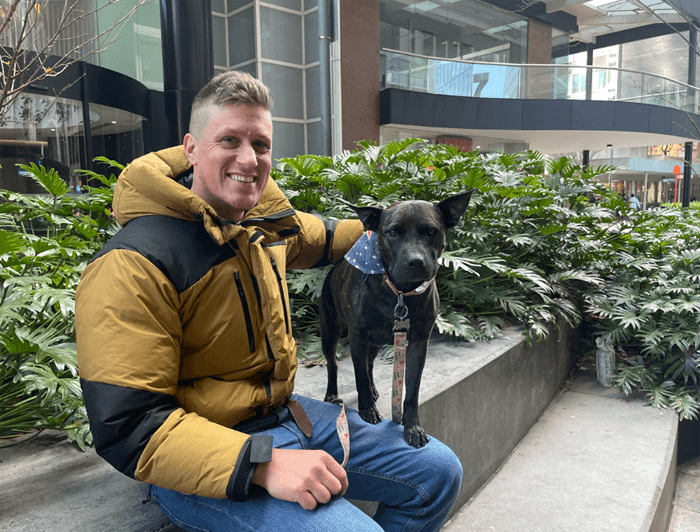
| Paul's dog, Rosie, was diagnosed with cancer in 2024. |
| The standard treatment of chemotherapy and surgery for Rosie proved to be ineffective. The tumors continued to grow, and Rosie got worse. |
| |
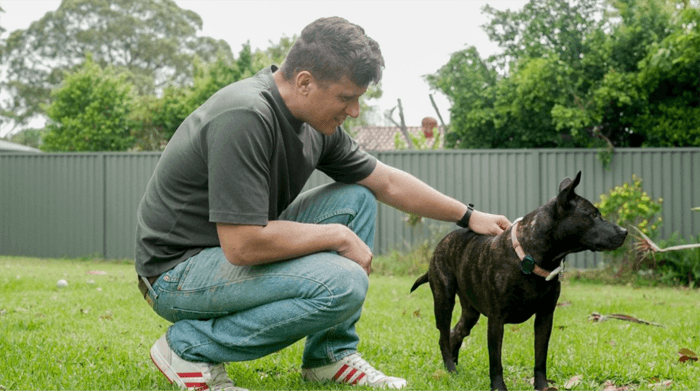
| Conyngham with Rosie | Source: University of New South Wales |
| Conyngham, a tech entrepreneur, didn't give up. |
| He turned to OpenAI's ChatGPT for help to see if there were any options. |
| ChatGPT's counselling recommended that Conyngham reach out to the Genomics Center at the University of New South Wales for help. |
| It was a completely unorthodox recommendation, as the genomics center is focused on the human genome. |
| But DNA is DNA, and really, the suggestion from ChatGPT made perfect sense. |
| Conyngham paid the team at the University $3,000 to sequence both Rosie's genome and the tumor's DNA so that he had the data to work with. |
| You might be surprised to learn that Conyngham's background is in electrical engineering and computer science. |
| He has no medical training whatsoever, but he knew if he had the data on Rosie and her cancer, he just might be able to work with AI to come up with a solution. |
| And that's exactly what he did. |
| Doctor AI |
| Using ChatGPT, Conyngham came up with a process for how he might be able to create a therapy for Rosie. |
| Part of that process used AlphaFold 2, the frontier AI model developed by Google's DeepMind division, which accurately predicts the protein structures of all known proteins on Earth. |
| Conyngham used AlphaFold 2 to find mutated proteins in Rosie's cancer tumors that could be therapeutic targets. |
| Through this process, he discovered that there was an existing immunotherapy product on the market that might just help save Rosie… |
| But the drugmaker refused to provide the therapy to Conyngham for Rosie. |
| But he didn't give up. |
| Aided with AI, Conyngham discovered seven strong signals for neoantigens – proteins that are formed on the surface of cancer cells – which could be used as targets for a cancer vaccine. |
| With this in mind, he used AI to create an mRNA cancer vaccine to target those Rosie-specific neoantigens. |
| Conyngham then convinced a team at the University to manufacture this therapy, which was designed entirely by an AI. |
| All of the media wrote headlines along the lines of "Man Uses ChatGPT to Save Dog," but none of them told the truth. |
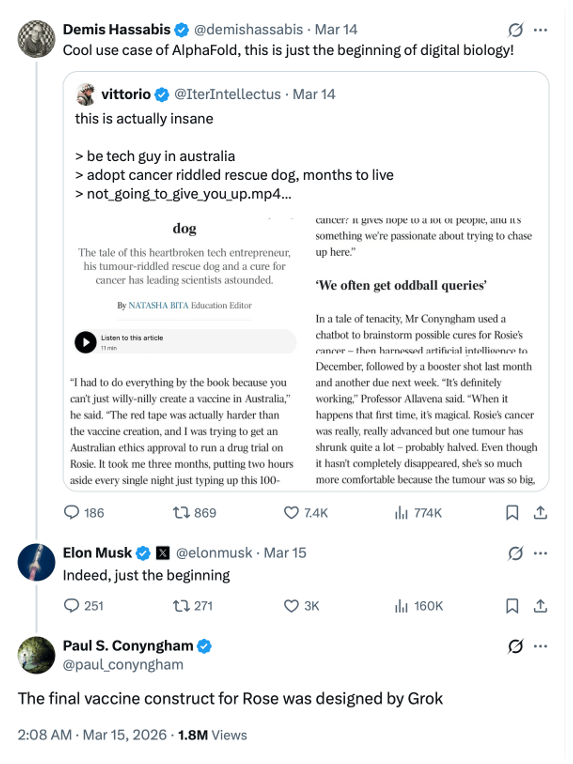
| While he started his journey with ChatGPT and leveraged the protein structure work at DeepMind, it was xAI's Grok that created the cancer therapy. |
| |
| "The final vaccine construct for Rosie was designed by Grok." |
| The maximum truth-seeking AI delivers the goods. Based. And not even the university would acknowledge that. |
| But even more remarkable was that Conyngham was able to do all this work in a matter of months. |
| Then he hit a hiccup. |
| |
| Lethargy in the System |
| Getting the "ethics approval" in Australia to administer the cancer therapy to Rosie was the more difficult task. It took far longer than the time to develop the cancer therapy with AI. |
| Needless to say, it shouldn't be that way. |
| Conyngham found someone in Brisbane at the University of Queensland to administer the therapy – along with another idea provided by AI to use a checkpoint inhibitor to support Rosie's immune system – used in conjunction with Rosie's personalized mRNA therapy. |
| Within days of receiving the injections in the area where Rosie's tumors were on her legs, the size of the tumors melted away. |
| The cancer had been reduced by about 75%, to all the experts' amazement. |
| |
| Rosie returned to her energetic self, and her coat became glossy again. The lethargy disappeared… |
| She isn't cancer-free yet, as some additional tumors have different sequences to deal with – perhaps another personalized therapy is another path forward. |
| But that's not the point. |
| The point is that someone with no medical training whatsoever leveraged AI to devise a custom cancer vaccine entirely on their own, in just a few months, for just $3,000. And it proved to be effective in treating his dog. |
| This is precisely what the medical industry should be racing towards. |
| Time to Accelerate |
| We have all the technology available to us today. |
| Genomic sequencing is only about $200 for a human genome. |
| Cancer cells can be sequenced cheaply, as well. |
| AlphaFold can be used for understanding related protein structures. |
| And Grok, and perhaps other leading AI models, can be used to design a personalized cancer therapy, not just for dogs, but for humans. DNA is DNA. |
| It's the healthcare industry that's lethargic. |
| Biotech companies and genomics companies need to accelerate right now with methodologies and workflows that will enable the fast development of personalized therapies using artificial intelligence. |
| And in collaboration with the FDA, it's critical that a clinical trial construct be designed that enables the approval of the therapeutic approach and delivery mechanism for these kinds of personalized therapies. |
| Now is the time to flip the entire health care approach upside down. |
| Rather than developing generalized therapies that have horrible side effects and limited efficacy depending on each individual's genome and cancer subtype, develop personalized therapies that are designed for the specific mutations and proteins relevant to each individual patient. |
| As we saw with Conyngham, this can be done for thousands of dollars (or likely tens of thousands of dollars for humans), compared to the hundreds of thousands or millions of dollars of expenses racked up for current oncology treatments today. |
| I do recognize that pharmaceutical companies will likely generate less revenue in a world like this, but they'll also stop wasting billions of dollars on clinical trials and drug development that'll never get approved. |
| And most important of all, the outcomes will be dramatically better for us humans and our canine loved ones, with the help of our generally intelligent collaborators like Grok. |
| This is the way. This is the future. |
| We have so much to look forward to, |
| Jeff |
| |







0 Response to "Leveraging AI for Personalized Cancer Therapies"
Post a Comment