 Dressed head to toe in black... She was known as The Witch of Wall Street. The newspapers called her cold and heartless. People mocked her as a miser. Investors whispered that she was mad as a hatter… a cruel, outcast who didn’t belong in high society. They ridiculed her infamous frugality… claiming she lived in boarding houses, only owned one black dress, and pinched pennies until they bled. But what nobody could deny was that Hetty Green was rich… When banks were collapsing in the Panic of 1907, it wasn’t just J.P. Morgan who stepped in. Hetty Green quietly wrote a check for $1.1 million in cash to keep the National Bank of Commerce afloat – a staggering amount of capital in those days that almost nobody else could raise. When titans of the Gilded Age lost their fortunes, they often turned to Hetty. And she became one of the era’s most reliable lenders of last resort, demanding collateral but offering liquidity when no one else would. When New York City couldn’t meet payroll in 1898, it wasn’t the U.S. Treasury that saved them… it was Hetty Green. And when Manhattan real estate crashed during panics, it was Hetty who scooped up prime properties for pennies, building a fortune while others were ruined. But Hetty Green’s most famous investment of all… the trade that earned her the greatest fortune – is one that I believe you and I can model. And Erez Kalir and I just sat down to share all the details with you. 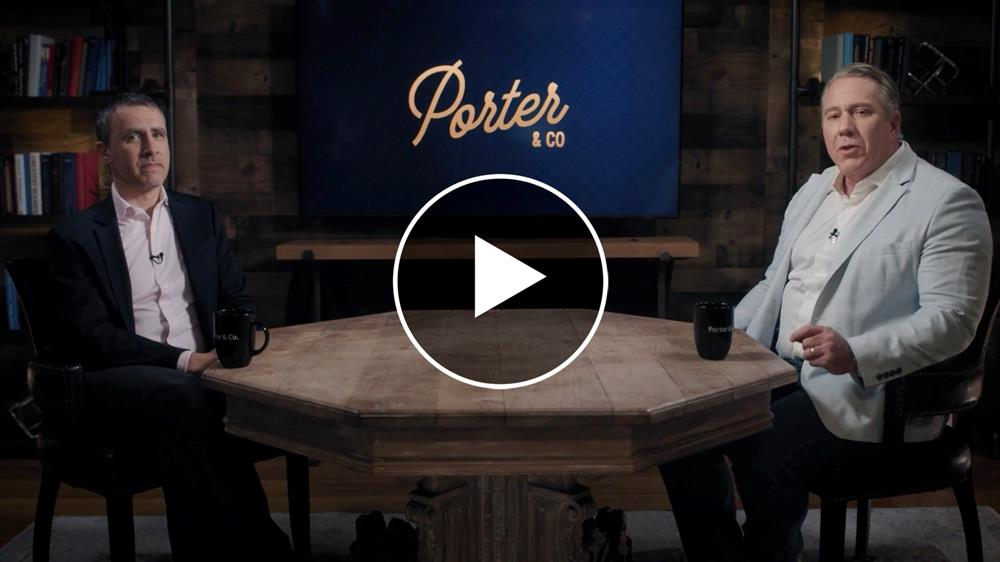
Let me explain: During the Civil War, The Union was printing colossal quantities of the paper “greenbacks” to fund the eye watering costs of the war. The greenbacks weren’t backed by gold or silver, just government credit… basically a promissory note. And even as the war ended, there was still a lot of uncertainty around America’s economic future. Nobody knew whether or not the government would make good on promises to make good on the greenbacks they had issued so freely. Which was a fair assumption at the time. The war had devastated vast swaths of farmland. Hundreds of thousands of young men lost their lives. So, like they often do, people rushed to gold and silver looking for safety and the value of greenbacks dropped as low as 50 cents against the gold-back dollar. But Hetty Green saw what others couldn’t. She predicted the government would easily be able to honour their debts. She saw that with the war over, the full industrial power of America would be switched on. Coal, iron, oil, copper, gold, silver… she knew they would all boom as America rebuilt itself from the ashes. So she bought up all the greenbacks that she could get her hands on, predicting they would eventually be re-valued… And when the U.S. government did eventually agree to redeem greenbacks at face value, Hetty made an absolute fortune. In today’s money, we’re probably talking about tens of millions of dollars. And what Erez and I have discovered is like a modern-day equivalent of this trade. Except it could potentially be far greater because it revolves around what could be the biggest financial story of the century. At the centre of it all is a multi-billion asset hiding inside a boring blue-chip stock Wall Street has completely mis-priced. An asset that’s worth more than the entire business itself but that is invisible on the books. And when people wake up to the reality of this mis-pricing… we believe we’re going to see a complete re-valuation of the business that could add billions to its market cap. Yet, Wall Street isn’t accounting for this outcome. They’re either ignorant of the opportunity because the company is too obscure or it’s the old Upton Sinclair insight that: “it is difficult to get a man to understand something when his salary depends upon his not understanding it." Because if those in the financial sector understood the shift happening beneath their feet, they would see it as an existential threat. Bad news for them. Good news for us. Because it gives us a rare window of opportunity to get in on what Erez and I believe could be one of the most asymmetric investment opportunities of our careers. You see, just like Hetty Green spotting a coming reprice in greenbacks, we believe Wall Street could soon wake up to this multi-billion dollar discrepancy. And when that happens, you could be looking at the type of returns that only come along once in a generation. When Erez brought this idea to me, I knew we needed to get this to you ASAP. Not only due to the upside potential but because five major catalysts are converging on this story. Catalysts that Erez believes could catapult this into the mainstream, causing the company to potentially double or triple. Things are moving so fast that the first one was recently triggered. Get the full story by going here now. Good investing, Porter Stansberry
Just For You Would a Tesla–SpaceX Merger Be the Ultimate Musk Move...or a Red Flag?Author: Sam Quirke. First Published: 4/3/2026. With shares of Tesla Inc (NASDAQ: TSLA) continuing to trade on the back foot, investors are wondering whether the company's best days are behind it. Despite loudly promoting his vision to transform Tesla into the world's leading robotics and autonomy company, CEO Elon Musk has yet to convince investors this will happen soon. Meanwhile, Tesla continues to underwhelm on its core EV business: reports earlier this week indicate it missed Q1 delivery targets. With signs that its traditional business is slowing and its future businesses show little momentum, it's not surprising the company may be exploring other ways to stay relevant. In recent weeks, certain rumors have gained traction that, if true, would certainly change the narrative. Those rumors center on speculation that Musk may seek to consolidate parts of his broader ecosystem—potentially including some form of Tesla–SpaceX combination.
SpaceX is reportedly on track for what would be a record-breaking IPO later this year, and if Tesla could ride that hype, the stock might reverse its downtrend. It sounds exciting, but the real questions are what's driving the chatter and what the practical upside and downside would look like if the idea moved from rumor to reality. Why the SpaceX Merger Narrative Is Gaining CredibilityThe possibility of a Tesla–SpaceX merger shouldn't surprise investors: Musk has already shown a willingness to consolidate his companies where it makes strategic sense. When SpaceX announced on Feb. 2 that xAI—Musk's AI company behind the Grok chatbot—had joined SpaceX, it highlighted growing overlap across the compute infrastructures, autonomy visions, and artificial intelligence capabilities used by these companies and Tesla itself. That overlap makes the idea of Tesla becoming part of that structure more credible than it would have seemed a year ago. Strategically, the upside case is easy to understand: a combined Tesla and SpaceX would pair Tesla's work in robotics, full self-driving and energy storage with SpaceX's global satellite infrastructure and launch capabilities. This is ultimately a narrative expansion. Tesla is already valued as more than an EV company, and a merger would reinforce the view that it is building a broader technology platform. If investors buy into that story, it could support higher valuation multiples over time. The Execution Risk Would Be RealSo far this year, investors haven't been convinced by Tesla's pivot narrative. The financial rationale for a potential merger is less clear than the strategic case. Tesla's valuation is still primarily driven by progress in autonomy, AI, robotics and energy—areas that could be boosted by a merger but don't strictly depend on it. SpaceX, preparing what may be the biggest IPO in history, doesn't need Tesla's balance sheet to continue scaling. In fact, merging teams and systems from two large companies could slow SpaceX down precisely when it needs to move faster. And that's before considering execution. Tesla is navigating a complex transition—balancing margin pressure in its EV business while investing heavily in AI and autonomy. Adding another capital-intensive business risks stretching management focus at a time when execution needs to be tighter than ever. What Comes Next—and What Investors Should Focus OnEven if Wedbush analyst Dan Ives believes Musk aims to create a unified "long-term AI juggernaut," a full merger remains unlikely in the near term. A more realistic path is continued collaboration across Musk's companies, with shared investments in AI, infrastructure and potentially hardware. That lets Tesla benefit from the broader ecosystem without taking on the full complexity of a merger, and it preserves the option to combine more formally later if it makes sense. From a stock perspective, the key drivers for Tesla remain unchanged. Its path back toward recent analyst targets—such as Canaccord Genuity's $420 or Wedbush's $600—will depend on verifiable progress and consistent follow-through. The stock's recent pullback has eased expectations, creating room for upside if execution improves in the coming quarters. That remains the core investment case today, more so than a potential merger that may or may not happen in the coming years. | 


0 Response to "Replicating one of the greatest trades of all time"
Post a Comment