
You are a free subscriber to Me and the Money Printer. To upgrade to paid and receive the daily Capital Wave Report - which features our Red-Green market signals, subscribe here. 101: What Is Quantitative Easing?“We’re not printing money.” - Every central banker who has ever printed money.
Dear Fellow Traveler, People hear “Quantitative Easing,” and their eyes glaze over and roll into the back of their heads… That’s kind of the point. If they called it “the Federal Reserve buying trillions of dollars in bonds with money it created from nothing in order to push down interest rates and inflate asset prices,” the political conversation would be very different, and I’d be President of Earth... They called it “QE…” and that sounds like a setting on a dishwasher… Smart play, everyone. Let’s dive into what this really is… It’ll be three minutes of your time… And when they do this next, you’ll make a fortune. But for now, you might need a drink. The MechanicIn normal times, the Federal Reserve controls the economy primarily through one lever… the federal funds rate. It raises the rate to slow things down and lowers it to speed things up. This is the thing you see on the news.
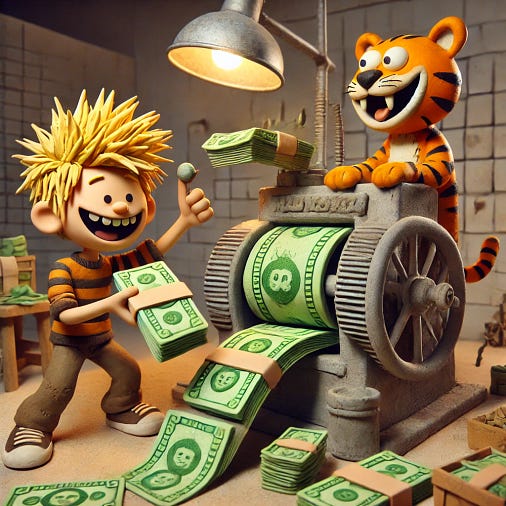
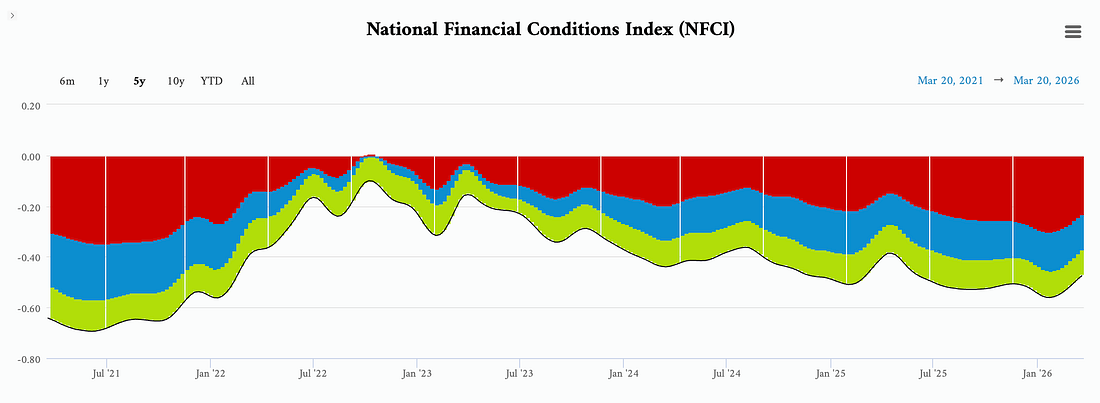
Simple enough. The problem is that the rate can only go so low. Once it hits zero on the Reserve Currency (The dollar), the lever stops working. You can’t cut rates below zero in any meaningful way without breaking things that are not supposed to break. So when the economy is in serious trouble, like in 2020, and the rate’s already at zero, the Fed needs a second lever. That second lever is quantitative easing. Here is how it works. The Fed creates new money… electronically, not by running a printing press, though the effect is the same… and uses that money to buy bonds from banks. Treasuries, mortgage-backed securities, sometimes other things. The banks get cash. The Fed gets bonds. The new cash floods into the financial system, pushing down long-term interest rates, making borrowing cheaper, and inflating the price of everything that isn’t nailed down. The theory is that cheaper borrowing and higher asset prices lead businesses to invest and consumers to spend. The reality is more complicated, but that’s the theory. Remember… pretty much all of finance operates on theory… The Side EffectsQE is easy to start and very difficult to stop. When the Fed buys trillions in bonds, it becomes the largest holder of government debt in the world. It becomes the market. And when you are the market, stepping away from the market has consequences. In a post-2008 world, when the Fed has tried to shrink its balance sheet… in 2018, in 2022… something has broken. The repo market has seized, and stocks have dropped. Even when the Fed tightened its balance sheet, we’ve seen other policies loosen economic conditions.
The Fed comes back in with more purchases, liquidity, and support. The balance sheet went from $900 billion before the 2008 crisis to $4.5 trillion after it. Then it briefly shrank to $3.7 trillion before the pandemic pushed it to $9 trillion. It is now around $6.9 trillion and, as of December 2025, growing again. We’re adding about $40 billion a month right now… and that doesn’t repo operations… We move from crisis to crisis… When it gets bad, the Fed buys. The crisis passes. The Fed then tries to stop buying, and something breaks. So, the Fed buys again. They’re buying $40 billion a month in Treasury Bills and claiming it isn’t stimulus. This is why people in the know drink. The InevitabilityQuantitative easing is not a temporary emergency program. It’s the structural reality of how the modern financial system functions. The government runs deficits that require bond issuance. The bond issuance requires buyers. When private buyers are insufficient or unwilling… the Fed steps in. It must. It’s structurally this important… The alternative is a failed Treasury auction, and a failed Treasury auction is the financial equivalent of the engine falling out of an airplane. They may not call it QE next time. They will call it something else.
The language will change because it always does. But the mechanic will be the same… the central bank creating money to buy government debt, because the system now requires it. This isn’t a prediction. It’s a description of what has already happened, repeatedly, for 18 years. The question isn’t whether the Fed will do more QE. The question is what they will call it and how long it will take before your neighbor’s house costs $47 million. The money printer goes BRRR. It WILL again… go BRRR. The only variable is the volume. But the good news is that we’re ready… Jamie Dimon will get richer… We’ll do okay too… Stay positive, Garrett Baldwin About Me and the Money Printer Me and the Money Printer is a daily publication covering the financial markets through three critical equations. We track liquidity (money in the financial system), momentum (where money is moving in the system), and insider buying (where Smart Money at companies is moving their money). Combining these elements with a deep understanding of central banking and how the global system works has allowed us to navigate financial cycles and boost our probability of success as investors and traders. This insight is based on roughly 17 years of intensive academic work at four universities, extensive collaboration with market experts, and the joy of trial and error in research. You can take a free look at our worldview and thesis right here. Disclaimer Nothing in this email should be considered personalized financial advice. While we may answer your general customer questions, we are not licensed under securities laws to guide your investment situation. Do not consider any communication between you and Florida Republic employees as financial advice. The communication in this letter is for information and educational purposes unless otherwise strictly worded as a recommendation. Model portfolios are tracked to showcase a variety of academic, fundamental, and technical tools, and insight is provided to help readers gain knowledge and experience. Readers should not trade if they cannot handle a loss and should not trade more than they can afford to lose. There are large amounts of risk in the equity markets. Consider consulting with a professional before making decisions with your money.
|




Subscribe to:
Post Comments (Atom)
0 Response to "101: What Is Quantitative Easing?"
Post a Comment