| |
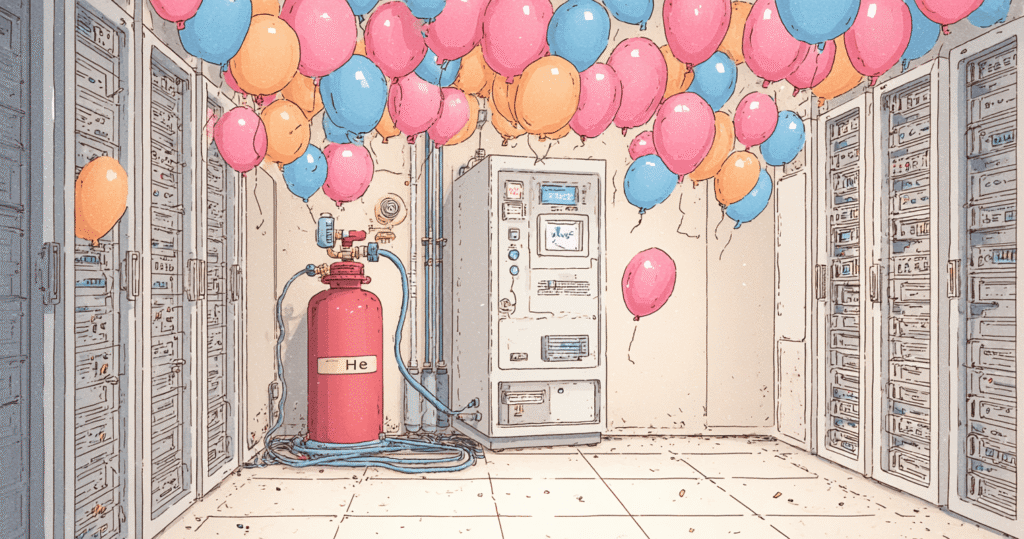
Of all the science experiments we were exposed to as kids, one of the most memorable, and certainly the funniest, was listening to our voices after inhaling a balloon full of helium (He). |
| Helium, a noble gas known for its extremely low chemical reactivity, is lighter than air, which is why balloons filled with it rise rather than fall. |
| And because it is less dense, sound travels as much as three times faster through helium than through air. |
| This faster speed amplifies the higher frequency resonance in our voice box, which results in the hilariously sounding higher pitch of our voices after we inhale the gas. |
| Lots of fun memories of giggling with a "helium voice"… |
| But what most don't think of or even know – as we're sucking in the gas – is just how critically important it is as an industrial gas. |
| Helium's superpower is that it is great at transferring heat, enabling it to cool down an industrial process. |
| The gas is widely used in the semiconductor industry during the etching process. |
| As intricate circuit patterns are etched onto a silicon wafer, helium gas is blown over the wafer to keep the wafer cooled… and at a constant temperature to avoid defects in the etching process. |
| To say that helium is a critical part of semiconductor manufacturing is an understatement. |
| The industry can't operate without it. |
| And there is no known replacement. |
| Noble Roles for a Noble Gas |
| Helium is also used to cool down the superconducting magnets used in magnetic resonance imaging (MRI) machines in the health care industry. |
| Perhaps even more surprising is that helium is used widely in the aerospace industry. |
| Because it doesn't react with a rocket propellant, helium is used to pressurize fuel tanks. |
| This is important, as it ensures that the required pressure in the fuel tank is maintained. Without that, there'd be no way to get safely to orbit. |
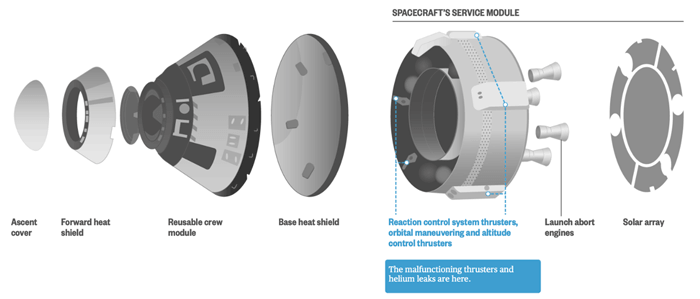
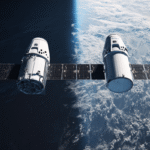
| A helium leak was, in fact, the Achilles heel for Boeing and its Starliner spacecraft when it was docked to the International Space Station (ISS) in 2024. |
| |
| Boeing's Starliner Spacecraft | Source: Boeing |
| Due to the helium leaks, the risk of pressurization problems was too high to ensure a safe return of astronauts. Boeing had to return the spacecraft to Earth empty. |
| SpaceX was called upon for a rescue mission to return the astronauts using its Dragon spacecraft. |
| This noble gas plays a noble role in various industries. |
| It's a very technology-centric gas. And suddenly, for the first time I can remember, it is getting a lot of attention. |
| The reason being that its sudden supply risk is a second-order effect from the current conflict with Iran. |
| Stuck in the Persian Gulf |
| The Ras Laffan natural gas plant is in Qatar. |
| It sits upon the world's single largest natural gas field. |
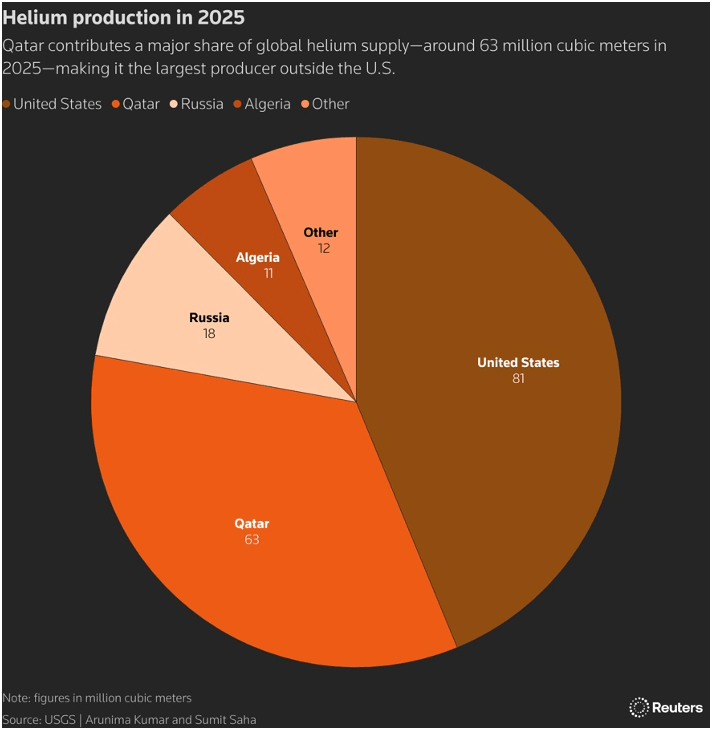
| This facility produces about 30% of the world's helium. |
| And since March 2nd, production of both liquefied natural gas (LNG) and helium has been shut down, due to Iran's drone attacks on the facility. |
| Qatar Gas, the owner of the facility, declared force majeure on its contracts, as it is unable to produce its products for reasons completely outside of its control. |
| Even with a quick end to the conflict with Iran, it may take a couple of years to repair all the damage from the attacks, impacting global helium supply for an extended period of time. |
| Naturally, when something like this happens, my team and I are thinking about the implications for the affected industries, and more specifically, individual companies. |
| Yes, the industry has an inventory of helium, but the question is how long it can last. |
| The semiconductor industry is operating at full steam right now, with no indication of a slowdown for any kind of logic and memory semiconductors that support every artificial intelligence (AI) application. |
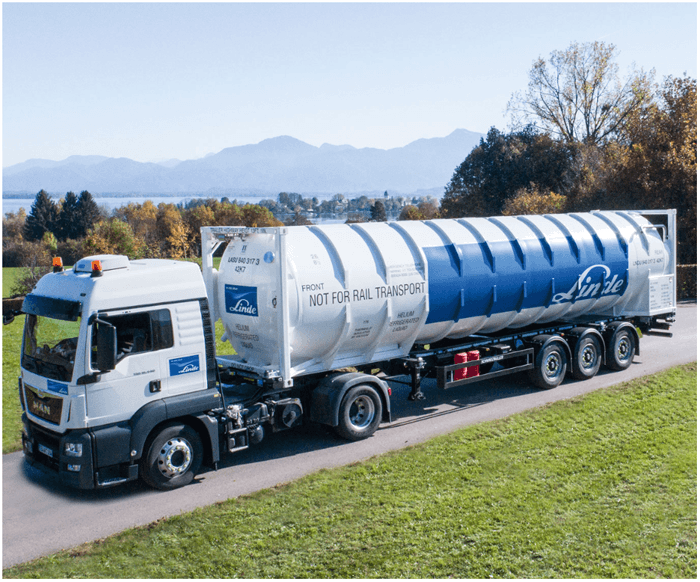
| At the moment, there are about 200 41,000-liter cryogenic tanks, like the one shown below, stuck in the Persian Gulf. |
| The helium is cooled to -269 degrees Celsius, and the tanks are incredibly well-insulated… allowing them to last for about 45 days. |
| |
| Source: GML |
| But the clock is ticking. |
| After that, the helium starts to boil… and a pressure valve on the tank bursts open… resulting in a loss of the helium into the atmosphere, which will worsen the helium supply crisis. |
| It's no surprise that some are predicting some stark conclusions that the tech markets are going to crash. |
| The line of thinking is: 30% of the world's helium supply is gone → no helium means no AI chips → no AI chips mean no AI data centers → no AI data centers mean AI boom screeches to a halt = the market is doomed. |
| Lions and tigers and bears… oh my! |
| It's easy to get sucked into that sort of superficial doom loop. |
| But this is exactly where expertise matters. |
| I have to shake my head when I see things like this. |
| They are so sophomoric and lack substance. |
| |
| At Risk |
| The Helium Doom Loop ignores the realities of how the affected industries and geographies will deal with the current supply shock in helium. |
| Yes, 30% of the global supply of helium is offline. |
| Algeria and Russia are also two of the largest suppliers of helium, but Russian exports of helium are banned, which is also not good. |
| But what about the world's largest supplier of helium? |
| Anyone? Anyone? |
| |
| Source: Reuters |
| It's the United States, with about 43% of global production. |
| The U.S. is the largest producer of natural gas, and helium is a byproduct of natural gas processing. |
| Helium-4 is entrapped and mixed with natural gas. And when natural gas is processed, helium-4 is extracted and further refined to 99.9999% purity, so that it can be used in semiconductor manufacturing applications. |
| So the real question becomes, which countries or companies are most exposed to the Qatar shortage of helium in their operations? |
| The U.S. natural gas market can increase production of helium… not by an amount to completely offset the normal supply from Qatar, but enough to keep U.S.-based companies operational, along with its closest manufacturing partners. |
| The largest risk in the tech sector is actually South Korea. |
| South Korea imports about 65% of its helium from Qatar. That's too significant a shortage to backstop. |
| That means that semiconductor manufacturer Samsung Electronics (SMSN) is particularly vulnerable, as is SK Hynix (Korea Stock Exchange: 000660). |
| Problems at Samsung Electronics could potentially negatively impact Tesla (TSLA), as Tesla outsources its semiconductor production to Samsung Electronics. But I assume that Samsung would prioritize Tesla as one of its most important customers. |
| Problems at SK Hynix, one of the world's largest memory makers, would certainly positively impact U.S.-based Micron Technology (MU), which probably won't have problems acquiring helium for its own semiconductor production. |
| The Obvious Beneficiaries |
| Other beneficiaries of the supply shortage are industrial gas suppliers that benefit from improved pricing power in a situation like this. |
| Companies like Linde (LIN), Air Products & Chemicals (APD), and Air Liquide (AIQUY) are all obvious beneficiaries. |
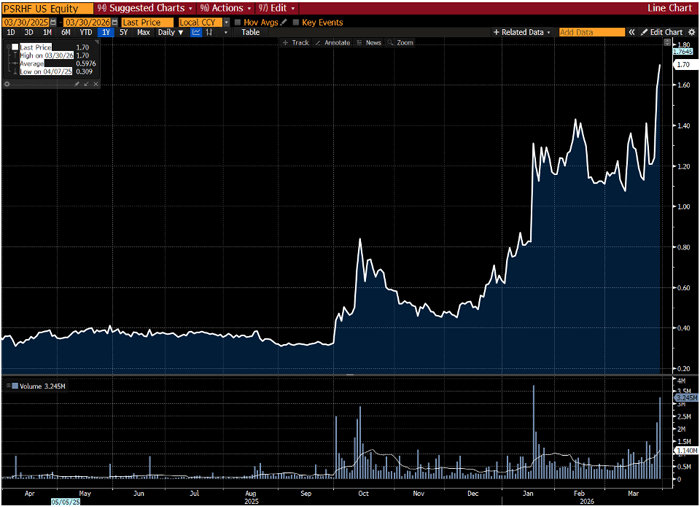
| And Pulsar Helium (PSRHF), a junior exploration company developing a high-grade helium discovery in Minnesota, has experienced a remarkable rise, catalyzed by this conflict. |
| 1-Year Chart of Pulsar Helium (PSRHF) |
| |
| We can be sure that Pulsar will be leaning in and working to accelerate the development of its discovery. |
| In fact, it conducted a secondary offering to raise additional capital just a month ago. |
| So this helium shortage is not cause for panic. |
| It won't slow down the AI semiconductor manufacturing at key companies like TSMC (TSM), Micron (MU), and, by extension, all the key fabless semiconductor companies like NVIDIA (NVDA), Advanced Micro Devices (AMD), and so on. |
| U.S.-based companies and their closest manufacturing partners will be the least negatively impacted. U.S. helium production will increase to help deal with the global supply shortages. |
| And it goes without saying, hopefully this conflict with Iran – and the risk of it acquiring and using nuclear weapons – subsides quickly in the weeks ahead. |
| Hoping for a peaceful resolution, |
| |
| |







0 Response to "Will Helium Kill the AI Boom?"
Post a Comment