Financial legend: “This is bad, really bad...” 
AI Spending Is Surging—But Which Stocks Still Win if It Slows Down?Written by Nathan Reiff on October 22, 2026 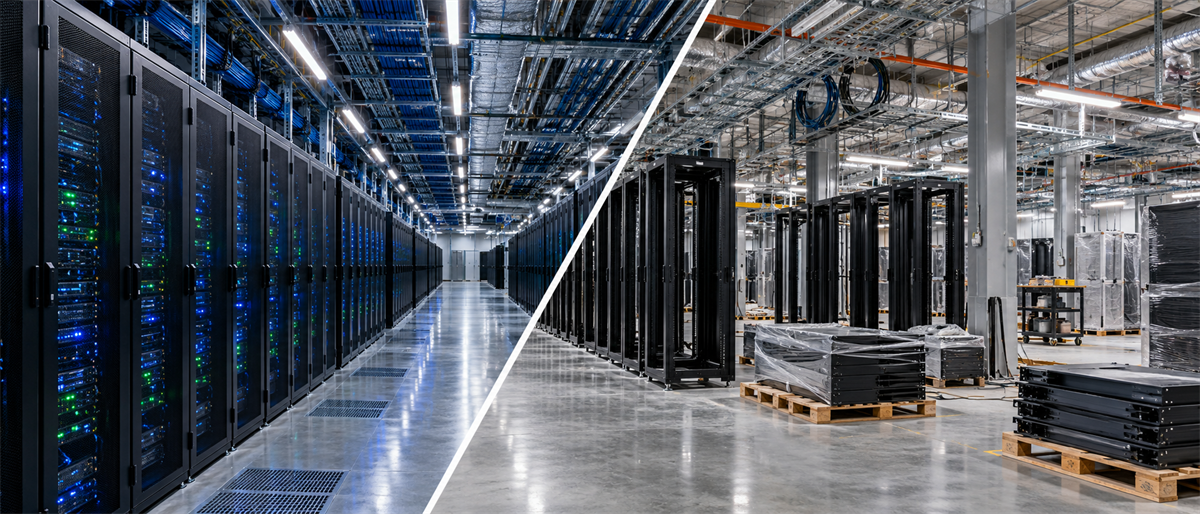
Key Points
- Massive AI infrastructure spending has fueled rallies across semiconductors, data centers, energy, and construction stocks, though sustainability remains uncertain if capital expenditure outpaces AI revenue growth.
- Dell Technologies and Core Scientific offer direct, higher-risk exposure to AI infrastructure demand, with large order backlogs but vulnerability if spending slows sharply.
- GE Vernova and Brookfield Asset Management provide more balanced exposure, since each retains stable revenue sources even if AI infrastructure growth decelerates.
- Special Report: Some investors are quietly packing a parachute

The long-term impact of AI remains to be seen, but the technology's effect on the market has already been significant, thanks in large part to the extraordinary capital expenditure put toward infrastructure. Semiconductor stocks, data center networking companies, energy suppliers, and even some construction companies have experienced prolonged rallies, driven by the massive momentum behind the nationwide infrastructure buildout. Goldman Sachs has predicted a 61% year-over-year (YOY) increase in domestic data center power demand for 2027, on top of the hundreds of billions of dollars hyperscalers have already spent this year. There are indications that, for some companies, we have not yet reached peak spending, but rather that this may be in the early stages of a multi-year cycle. On the other hand, if capital expenditure (CapEx) outpaces revenue growth from AI tools, the spending may prove unsustainable—and in that case, the bottom could drop out of AI infrastructure very quickly. The companies below provide different entry points for investors, based on their assessments of the AI landscape and unique risk/reward trade-offs.
A drilling crew near the Grand Canyon uncovered a clean energy well producing nearly eight times the output of Saudi Arabia's largest oil field, with potential to last two million years.
While the One Big Beautiful Bill Act eliminated federal credits for solar, wind, and EVs, this energy source was reclassified alongside oil and nuclear power and given eight years of tax credits. Google signed a 15-year contract, and Bill Gates committed $100 million.
One company controls the entire supply chain behind this discovery. See the ticker behind this Grand Canyon energy breakthrough now
Dell Is a Binary Play on AI Infrastructure SpendingLong known for its hardware, Dell Technologies Inc. (NYSE: DELL) may have found its greatest niche in AI servers. The company's Infrastructure Solutions Group (ISG) has grown faster than any segment in Dell's history, helping to fuel record Q2 performance, including 58% YOY revenue improvement and a record $61 billion in AI orders. Dell's backlog is extensive, reaching $95 billion across 6,500 customers as of the midpoint of the year. Best of all, the firm's AI server business is poised to reap significant benefits from recurring revenue. If AI infrastructure spending maintains its robust growth, Dell could be a major beneficiary. On the other hand, if spending slows, the company's server backlog will convert much more slowly, and the stock's valuation could also face pressure. Wall Street is betting on the former scenario, with three-quarters of analysts rating DELL a Buy. The stock has healthy upside even after surging more than 280% year to date (YTD). GE Vernova Benefits From AI Power Needs, But It Doesn't Rely on ThemEnergy technology firm GE Vernova Inc. (NYSE: GEV) is hardly the first company most investors think of when it comes to AI. The company is better known for wind turbines, electrification infrastructure, and the like. Nonetheless, its gas turbine technology has proven essential for data centers seeking reliability in power generation. With power infrastructure a significant need for AI, GEV stands to benefit from steady or increasing infrastructure buildout. However, if the AI space cools and demand slows, Vernova has a fundamental earnings floor completely independent of the industry. This should give investors looking to make a bet on AI but not convinced the buildout will continue at its current pace something to fall back on.
SpaceX just went public - and Whitney Tilson, Harvard MBA and 30-year Wall Street veteran, says buying in could be a costly mistake. He calls it among the most overhyped, overvalued large-cap offerings ever pushed onto everyday investors.
Tilson believes a rare economic event is approaching - one with serious consequences for your portfolio this summer. He has prepared a free analysis outlining what he sees and the specific steps he recommends taking now. Read Tilson's free analysis and find out what to do with your money
Brookfield Asset Management Could Thrive From Sale-Leasebacks, Long-Term ContractsBrookfield Asset Management Ltd. (NYSE: BAM) is an asset manager with a very different role in the AI industry than the other firms on this list. Rather than directly participating in the infrastructure buildout with technology or construction services, Brookfield provides capital to finance these projects. The company owns data center campuses, networking infrastructure, and other assets that typically generate contracted revenue under agreements spanning decades. This makes Brookfield a rare participant in the industry that may actually benefit more from a slowdown in construction than an acceleration. The reason for this is that hyperscalers may turn to sale-leaseback transactions to build up their capital if they are facing financial pressure. Brookfield would be uniquely positioned to benefit in this scenario thanks to about $1.2 trillion in managed assets. Core Scientific Represents the Highest-Risk, Highest-Reward ApproachThe most direct play on the AI buildout among the companies on this list is Core Scientific Inc. (NASDAQ: CORZ), which specializes in building and operating data centers and has rebuilt itself from bankruptcy in early 2024 after starting as a Bitcoin mining firm. Core Scientific owns about 1.3 gigawatts of power capacity across its portfolio of data centers. The company has a significant advantage over later entrants to the space thanks to its pre-existing infrastructure from its Bitcoin mining days. Power capacity is a highly constrained resource in the AI industry, and Core Scientific's infrastructure that is already built, connected, and permitted is a major boon. On the other hand, the company's bankruptcy filing was not long ago, and it remains in a fairly precarious financial position as it continues to rely on residual Bitcoin-related revenue. The complex long-term arrangement with CoreWeave Inc. (NASDAQ: CRWV) has been critical to Core Scientific's recovery, but it also leaves the firm exposed to dependency risk. A collapse in AI infrastructure spending could be catastrophic for this firm, even as it is positioned to benefit if current trends continue. Read this article online › Further Reading

Did you learn something from this article?  
|



0 Response to "How GE Vernova and Brookfield Hedge an AI Cooldown"
Post a Comment