

Ticker Reports for March 25th

2 Lesser-Known Photonics Firms May Play an Outsized Role in AI
While uncertainty is mounting about how the Iran war could disrupt the artificial intelligence industry's rapid growth trajectory, so far, there has not been a notable sell-off of big AI names. As a result, the industry's losses haven't outpaced the broader S&P 500's 4% year-to-date (YTD) loss.
In fact, despite external turbulence, new opportunities may be presenting themselves in the AI space. Specifically, a major investment by NVIDIA (NASDAQ: NVDA) of $2 billion each into two much smaller companies focused on photonics—Lumentum Holdings (NASDAQ: LITE) and Coherent Inc. (NYSE: COHR)—could signal an emerging focus on this developing branch of AI-adjacent technology.
NVIDIA appears bullish about how photonics firms could be instrumental in the next stage of AI infrastructure development. As a result, investors have flocked to those two firms, sending their shares higher over the last month.
This shift in technological focus has been enough to help to catapult other photonics firms upward as well. Here is what investors need to know.
Coherent's Big NVIDIA News Could Be Transformative, but Investors Should Keep an Eye on Valuation
One of the key issues impacting companies' ability to scale AI infrastructure is bandwidth. Traditional inter-chip communication methods are a limiting factor, and photonics may be essential to expanding that capacity as AI clusters continue to grow.
NVIDIA has made a significant bet in Coherent, one of the leading photonics companies, with a market capitalization of $51 billion. The two firms have a 20-year relationship, recently deepened by NVIDIA's latest investment as part of a non-exclusive agreement that will still allow Coherent to pursue other business.
COHR shares are up more than 45% YTD, which has led the stock to exceed the consensus price target of $241.92 by 11%. Still, COHR remains favorable among analysts, with 14 of 19 analysts covering the stock assigning it a Buy rating.
Still, investors may find that the company's fundamentals could help excuse its lofty valuation of 270 times earnings: Coherent's revenue surged by 17% year-over-year (YOY) for the latest quarter to about $1.7 billion, while earnings per share of $1.29 beat analyst expectations by an impressive 26 cents.
Driving those gains are significant data center growth rates, a significant ramp-up in production capacity, and optimistic guidance, including revenue for the current quarter as high as $1.84 billion and non-GAAP gross margin between 38.5% and 40.5%. Of course, investors should also keep in mind that the $2 billion private placement is dilutive, which adds an additional risk despite NVIDIA's apparent stamp of approval.
Shares of Photonics-Adjacent Nova Ltd. Are Soaring
While Coherent and Lumentum have dominated headlines in recent weeks because of NVIDIA, Nova Ltd. (NASDAQ: NVMI) is a photonics-adjacent firm quietly building momentum, with shares up more than 45% YTD.
Nova's metrology tools and process control equipment are valuable to semiconductor makers because they help to produce photonic components and advanced chips more broadly. Those tools are essential to the manufacturing and quality control processes for these AI materials. So it's little surprise that the booming AI market has naturally been great for Nova's business.
The company reported record full-year 2025 revenue of $881 million, up 31% YOY, with a forecast for Q1 2026 revenue of between $222 million and $232 million.
While Nova has not been the beneficiary of a major investment from NVIDIA, it is nonetheless gaining important traction with major partners. Multiple unidentified semiconductor makers have adopted the company's Metrion platform for their production needs. These partnerships are likely to continue generating revenue wins for years to come, helping to keep Nova steady amid a field that is often subject to cyclical trends.
Of the 10 analysts covering NVMI stock, nine assign it a Buy rating despite the current share price being nearly 9% higher than the consensus price target. Like Coherent, Nova's recent rally has stretched its valuation, but not to the same extent: The company currently trades at about 60X earnings. Investors drawn to Nova may share in the conviction that the firm is likely to continue to benefit from long-term partnerships as a critical player in the semiconductor manufacturing space.
Of course, given the significant rallies these and other stocks in the photonics (and adjacent) space have mounted in recent months, cautious investors worried about buying near the top may hold off for now. Both Coherent and Nova are now in a position to demonstrate their value to major manufacturers like NVIDIA—or to face a sell-off if enthusiasm wanes. But for those bullish about the future of photonics in the AI sphere, these two companies may be a great place to start looking.

Ticker Revealed: Pre-IPO Access to "Next Elon Musk" Company
Ticker Revealed: Pre-IPO Access to "Next Elon Musk" Company

GE Vernova: AI's Thirst for Power Creates a New Class of Winner
The artificial intelligence (AI) revolution is running on a hidden utility bill of staggering proportions. While investors have focused on the makers of sophisticated microchips and software, a more fundamental truth is emerging: The AI industry’s growth is directly tied to its access to massive, reliable, and ever-growing electricity supplies.
Projections show that by the end of the decade, data centers alone could consume as much electricity as entire countries. This unprecedented demand creates a powerful, tangible thematic investment that goes beyond Silicon Valley, focusing on the industrial backbone needed to power this global transformation.
As the market awakens to this new energy reality, GE Vernova (NYSE: GEV) is emerging as a key beneficiary. The company—a global leader in power generation and grid technology—has seen its stock price climb to new all-time highs.
This surge is not based on speculative hype, but rather on a clear and direct line connecting the world’s insatiable demand for AI with GE Vernova’s core business of creating and delivering electricity.
As the digital world expands, it is becoming clear that the companies providing the essential power infrastructure, like GE Vernova, are among the most critical enablers of the future.
More Intelligence, Unprecedented Power Demand
The core of the energy challenge lies in the nature of AI itself. Unlike traditional computing, training and running advanced AI models are incredibly energy-intensive processes. These operations require thousands of specialized processors to run continuously, generating immense heat and consuming vast amounts of power.
This creates a unique problem for data center operators, who require a constant, uninterrupted flow of electricity known as baseload power. Even a momentary lapse in power can disrupt critical processes and lead to significant financial losses, making reliability a non-negotiable demand.
This intense need creates a dual challenge for the global energy system. First, there is a pressing need for more power generation capacity to meet the surging demand. Second, the existing electrical grid—much of which is decades old—is often not equipped to transmit this new power to the specific locations where data centers are being built. This situation has created a multi-billion-dollar market opportunity for companies that can solve both problems.
- New Power Plants: A surge in demand for facilities, particularly those using natural gas, that can provide consistent, 24/7 power.
- Grid Modernization: An urgent need for new transformers, substations, and advanced software to upgrade and expand the electrical grid.
- Sustainable Solutions: A growing requirement from corporations to integrate renewable energy to help offset the massive carbon footprint of their data centers.
How GE Vernova Wins the Power Race
GE Vernova is uniquely positioned to capitalize on this opportunity through its comprehensive portfolio of energy solutions. The company offers an end-to-end approach that addresses the entire energy value chain, from generation to delivery, giving it a distinct advantage.
The Gas Power Workhorse
At the heart of GE Vernova’s strategy is its Power segment, which builds and services the world’s most advanced gas turbines. GE Vernova’s flagship H-Class turbines, known for their industry-leading efficiency, have become the go-to solution for providing the reliable baseload power that data centers require.
This is not just anecdotal; the numbers confirm the trend. GE Vernova recently reported a 65% organic increase in orders for this segment, contributing to a massive backlog that provides excellent visibility into future revenue and confirms its central role in the energy build-out.
The Essential Grid
Generating electricity is only half the battle; it must be delivered efficiently and reliably. This is where GE Vernova’s Electrification segment becomes critical. This division provides the essential hardware and software—from high-voltage transformers to grid management systems—that are needed to modernize and expand the power grid.
As utilities and data center developers invest billions to upgrade infrastructure, this segment represents a massive and parallel revenue stream for GE Vernova, ensuring it profits not just from making the power but also from delivering it. This capability is crucial, as an inability to upgrade the grid is quickly becoming the primary bottleneck for new data center construction.
The Competitive Edge
While other industrial companies like Siemens Energy (OTCMKTS: SMEGF) are also benefitting from this trend, GE Vernova’s deep expertise and market leadership in high-efficiency gas turbines provide a significant competitive advantage. Its integrated approach, combining best-in-class power generation with the necessary grid solutions, allows it to offer a more complete package to customers building out the infrastructure of the AI era.
Market Signals Validate GE Vernova's AI Power Play
The investment community has taken notice of GE Vernova’s strategic position, a sentiment reflected in both its stock performance and strong institutional support, including inflows of more than $50 billion over the past year compared to just $17 billion in outflows.
GE Vernova’s management has signaled immense confidence in its future financial performance. It recently announced it was doubling its quarterly dividend, a move that returns more cash to shareholders. For investors, this signals a belief in strong, stable, and growing cash flows, a hallmark of a healthy and mature business. Furthermore, the board authorized a significant stock buyback program, indicating that leadership believes GE Vernova's shares are a worthwhile investment at current levels.
GE Vernova’s analyst community has been overwhelmingly positive, with numerous firms raising their price targets for GEV stock. This bullish sentiment is directly tied to the AI thesis:
- Morgan Stanley recently boosted its price target to $960, citing strong turbine pricing and immense demand driven by electrification.
- In another significant move, Rothschild & Co upgraded the stock from Sell to Buy, issuing a high price target of $1,100.
- Of the 27 analysts covering the stock, the vast majority rate it a Buy or Strong Buy, reflecting a broad consensus on its positive outlook.
Adding to the bullish case, GE Vernova was recently added to the prestigious S&P 100 index. This inclusion serves as a stamp of approval that increases the stock’s visibility and forces large index-tracking funds to purchase shares. In turn, this creates steady, underlying demand for the stock from some of the world's largest investment managers.
The Foundational Power Play for the AI Era
As AI continues to reshape the global economy, electricity demand stands out as the most certain and fundamental byproduct of this technological shift. The companies that provide the foundational power for this transformation are positioned for sustained growth. In contrast to more speculative technology stocks, GE Vernova is a tangible, industrial powerhouse building the indispensable infrastructure for the digital future.
For investors looking to capitalize on the AI megatrend through a company with a healthy backlog, essential assets, and a critical role in global infrastructure, GE Vernova’s market leadership and clear path to growth offer a powerful, foundational thesis. This is not a story about a single quarter's earnings, but a long-term narrative about providing the power for decades of innovation to come.

Elon Musk already made me a "wealthy man"
Elon Musk already made me a "wealthy man"
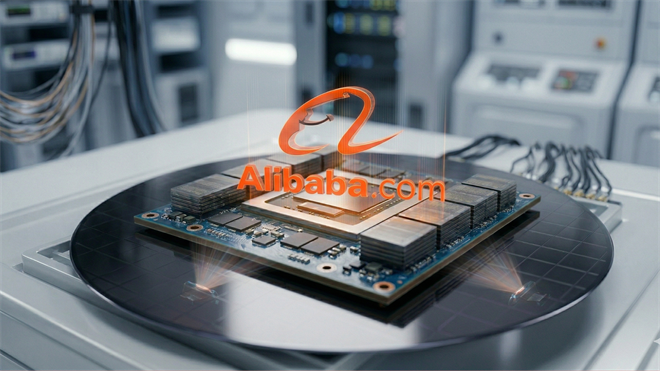
Why Alibaba's New 5nm Chip Could Be a Game Changer
For Alibaba Group (NYSE: BABA) investors, recent market activity has presented a confusing picture.
The stock has faced significant volatility, driven by an earnings report that missed analyst expectations and highlighted pressure on profitability. This short-term data has painted a bearish narrative for some.
Yet, running counter to this sentiment is a powerful, long-term signal of deep-seated strength: the recent unveiling of a world-class, proprietary artificial intelligence (AI) chip. This development suggests a fundamental and positive shift in Alibaba's strategy. The critical question for investors now is which signal to follow: the noise of Alibaba’s most recent earnings report or the strategic sound of technological independence.
The Advantage of a Custom Design
Alibaba's research division recently announced the XuanTie C950, a server chip that represents a major technological milestone. For investors, the specifications of this chip are less important than what they signify for the business's future.
First, its 5-nanometer classification places it at the cutting edge of semiconductor manufacturing. This demonstrates a high level of design capability, putting Alibaba in an elite group of companies capable of developing such advanced hardware. It is a clear indicator that Alibaba can compete at the highest levels of the technology sector.
Second, the chip is built on the RISC-V architecture. For those unfamiliar, RISC-V can be thought of as an open-source blueprint for designing chips. This is a critical strategic choice. By using an open-source framework, Alibaba avoids licensing fees and, more importantly, insulates itself from the potential restrictions and political pressures associated with Western-controlled chip architectures. This provides Alibaba with greater control over its technological destiny.
Finally, the C950 is not a general-purpose processor; it is custom-designed for the demands of artificial intelligence. It is optimized to run the complex calculations required by AI models and cloud computing platforms, which enables powerful vertical integration.
By designing the hardware that runs its software and cloud services, Alibaba can achieve levels of efficiency and performance that are difficult to match when using off-the-shelf components. Over time, this integration can lead to significant cost savings and superior product offerings, directly driving future margin expansion for its cloud division.
From Geopolitical Risk to Strategic Resilience
One of the most significant risks facing Chinese technology companies has been the persistent threat of U.S. export controls, particularly those targeting advanced semiconductors essential for AI development. These restrictions have created a ceiling of uncertainty for companies dependent on foreign suppliers, weighing heavily on their stock valuations.
Alibaba's development of the C950 is a direct and effective response to this challenge. By successfully designing its own high-performance chip, Alibaba has created a strategic insurance policy. This move ensures that its ambitious growth plans for its Cloud Intelligence and AI divisions are not held captive by the shifting tides of international politics.
For investors, it is a crucial de-risking of the stock. The ability to produce its own core hardware components moves Alibaba from a position of dependency to one of self-reliance. It demonstrates a proactive and forward-thinking management approach focused on building a durable, long-term business. By mitigating this external threat, Alibaba could become more attractive to a broader range of global investors, potentially leading to a positive valuation re-rating.
In essence, Alibaba is constructing a geopolitical moat around its most valuable growth engine.
Gaining an Edge in a Crowded Field
Technological independence is not just a defensive maneuver; it is also a powerful offensive weapon in the highly competitive AI and cloud computing markets. The C950 provides Alibaba with a distinct competitive advantage over its domestic and international rivals.
Within China, the cloud market is a fierce battleground, with key players such as Tencent (OTCMKTS: TCEHY) Cloud and Baidu (NASDAQ: BIDU) AI Cloud. While competitors also invest heavily in AI, Alibaba's ability to create a vertically integrated system in which its proprietary software is perfectly optimized for its proprietary hardware can create a long-term performance and cost advantage that is difficult for others to replicate. This can translate directly into winning larger enterprise cloud contracts and increasing market share.
On the global stage, this move places Alibaba in the same strategic league as U.S. technology giants like Amazon (NASDAQ: AMZN) and Alphabet's (NASDAQ: GOOGL) Google. These companies have long understood the benefits of designing their own custom silicon to power their massive cloud infrastructures, a hallmark of the world’s most successful technology firms.
By developing its own chip, Alibaba is signaling that it is not just a participant in the AI revolution but a foundational architect. This elevates its status from a Chinese e-commerce sector leader to a global-caliber technology powerhouse.
The Price of Progress and the Promise of Payoff
Alibaba's most recent earnings report showed a 67% year-over-year (YOY) decline in non-GAAP net income, a figure that understandably caused concern. However, this number cannot be viewed in isolation. It is directly connected to the immense but necessary investments in Alibaba's AI-first strategy, including the capital-intensive process of designing world-class semiconductors.
Markets that focus on quarterly results often misprice companies undergoing deep strategic transformations. The cost of innovation is substantial, but the payoff is already beginning to show.
The standout metric in the same earnings report was the 36% YOY revenue growth in the Cloud Intelligence Group—the first tangible result of Alibaba's focused investment in its AI capabilities.
This provides investors with clear evidence that the strategy is fueling top-line growth in what is arguably Alibaba's most important future business segment.
Wall Street analysts, while adjusting near-term expectations due to the heavy spending, appear to recognize this long-term potential. The consensus 12-month price target for Alibaba’s stock remains around $188, suggesting that institutional experts see healthy upside from current levels once these strategic investments fully mature.
Seeing the Value Beyond the Volatility
The market's recent focus on short-term margin pressures and e-commerce competition has created a significant disconnect between Alibaba's current share price and its long-term strategic value. The development of the XuanTie C950 chip is more than just a product launch; it is the cornerstone of a new, more resilient foundation for Alibaba's future.
This pivot to technological self-sufficiency has fundamentally strengthened the investment thesis. It has mitigated a major geopolitical risk, created a durable competitive advantage, and provided the justification for Alibaba's current financial strategy.
For investors with a time horizon that looks beyond the next quarter, the current valuation may present a compelling opportunity. Alibaba appears to be at a strategic inflection point, with its most important investments in AI and cloud computing just beginning to transform the business from the inside out.

Have $500? Invest in Elon's AI Masterplan
Have $500? Invest in Elon's AI Masterplan

MarketBeat Media, LLC dba TickerReport
345 N Reid Place, Suite 620, Sioux Falls, SD 57103.
0 Response to "🌟 2 Lesser-Known Photonics Firms May Play an Outsized Role in AI"
Post a Comment