|
Why the 10-Year Yield Sets Borrowing Costs
|
|
Treasury yields help establish the cost of money throughout the economy.
|
|
The 10-year yield acts as a benchmark for mortgage rates, business loans, and corporate bonds. So when it rises, borrowing generally becomes more expensive too.
|
|
That means folks might delay buying a new home, for example, or making large purchases. Businesses will face higher costs when refinancing debt or funding new projects – and companies may become more cautious about hiring and expansion.
|
|
In short, rising yields can act like a brake on economic activity.
|
|
That pressure wasn’t visible in Wednesday’s strong data yet. But it matters a lot more if the Fed’s latest hike is followed by another – and maybe a third.
|
|
At some point, higher borrowing costs cause consumers to delay purchases and businesses to scale back investment.
|
|
That’s why apparently good economic news can actually harm stocks. A stronger economy may support earnings, but it can also keep inflation elevated and increase the likelihood of future rate hikes.
|
|
The trick for the Fed is applying enough pressure to bring inflation under control without slowing demand so sharply that it causes serious damage to the economy.
|
Tune in to Trading With Larry Live 
Each week, Market Wizard Larry Benedict goes live to share his thoughts on what’s impacting the markets. Whether you’re a novice or expert trader, you won’t want to miss Larry’s insights and analysis. Even better, it’s free to watch. Visit us on YouTube to catch the latest! |
|
|
When Bonds Pay 5%, Capital Rotates Out of Stocks
|
|
When bond yields are low, investors see little return in safe-haven assets like government bonds. So they look to riskier assets like stocks to boost their returns.
|
|
But when 10-year Treasury yields push up above 5% – and the 30-year yield above 5.4% – that equation starts to change. Investors can earn an increasingly attractive return from relatively safer government bonds.
|
|
It comes back to risk versus return.
|
|
Large funds and institutions begin rethinking how much stock risk they’re willing to take on. Even a modest reallocation into government bonds can affect stock prices when enormous pools of capital are involved.
|
|
To be clear, it doesn’t mean that stocks must fall simply because yields reach a particular level. Markets don’t go in a straight line. The important thing is the direction and speed of the move – and whether that same message appears across other markets…
|
|
This week’s strong data was the main catalyst behind the surge in bond yields. But importantly, it landed in a market already worried about high oil prices, persistent inflation, Fed tightening, and the growing pile of government debt that needs buyers.
|
|
That’s why the reaction was so sharp.
|
|
From here, I’ll watch whether the 10-year yield can hold above the 5% level. If yields and the U.S. dollar continue rising while growth and tech stocks weaken, it could suggest that the market is pricing in more rate hikes ahead.
|
|
You don’t need to become a bond trader to benefit from watching bonds.
|
|
But if you ignore the bond market completely, you’re overlooking one of the most important factors affecting the stocks you trade.
|
|
Regards,
|
|
Larry Benedict
Editor, Trading With Larry Benedict
|
|
|
Get Instant Trade Alerts on Mobile!
|
|
|
|
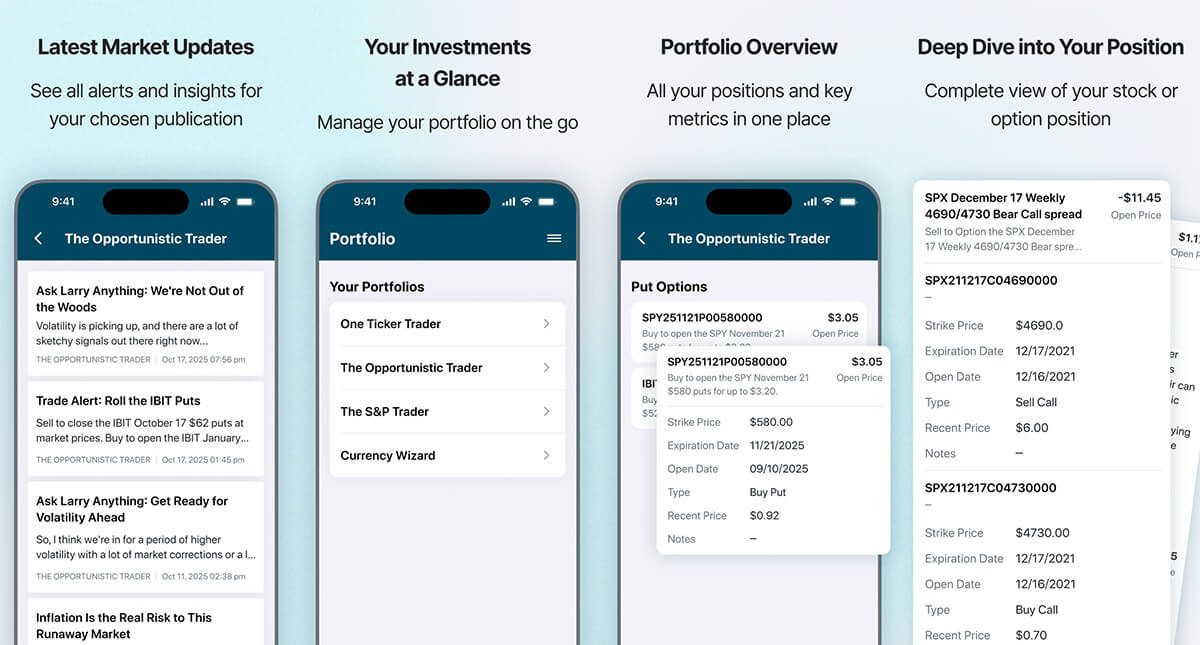
Click the icon below from your mobile device to download The Opportunistic Trader app today for one-tap access to trade alerts, issues, and model portfolios for all of Larry’s services.
|
|
Available in the app store on Android and iPhone.
|
|
|
|














0 Response to "Rising Treasury Yields Are Flashing a Warning for Stocks"
Post a Comment